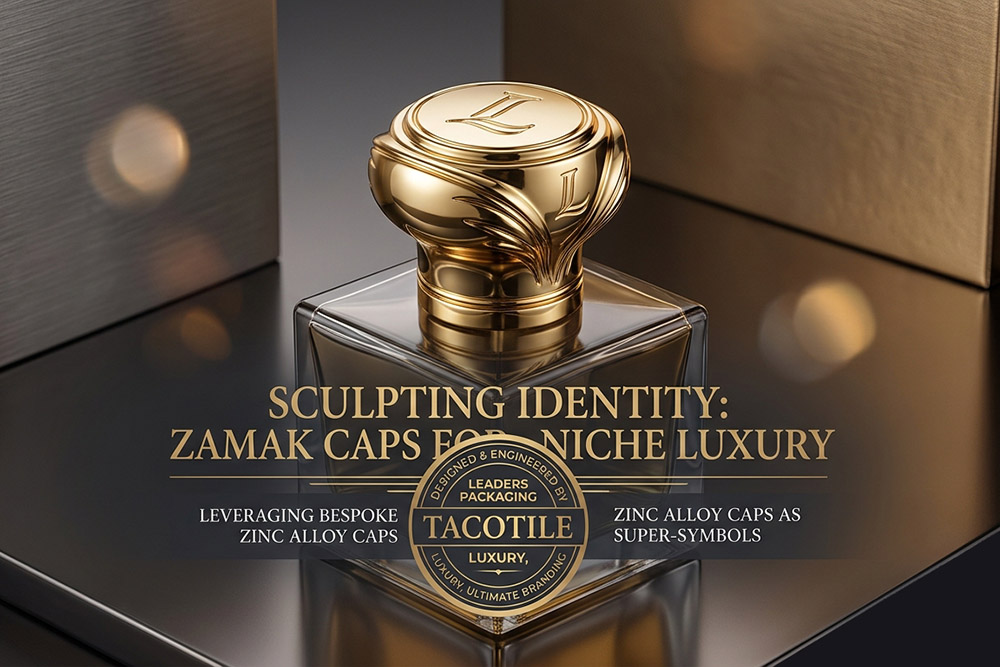
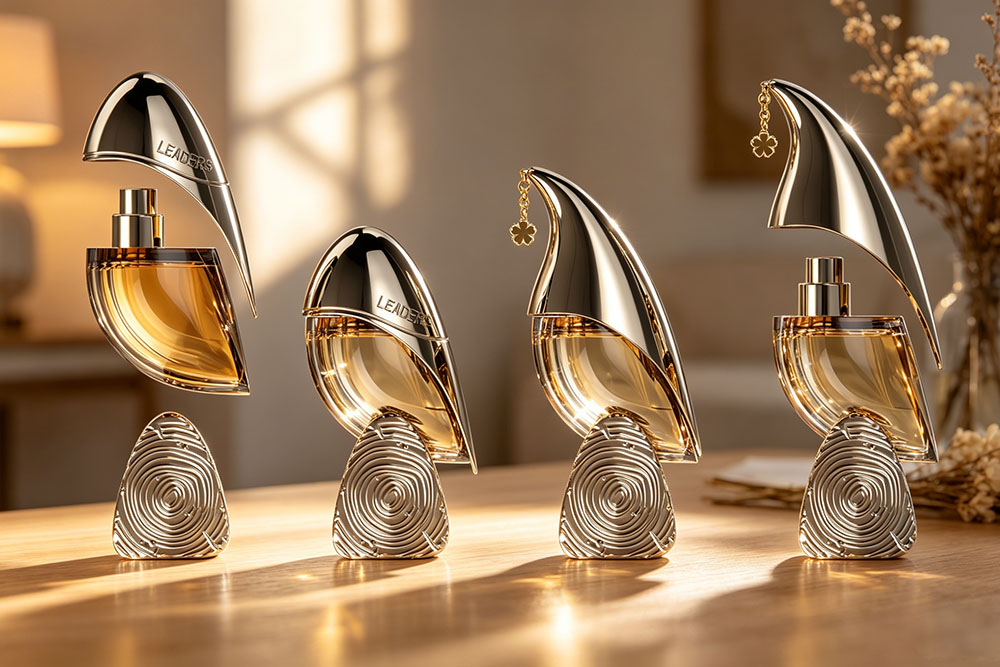
A custom gold sculptural Zamak (zinc alloy) perfume bottle cap on a glass bottle, by Leaders Packaging for niche luxury brands.

Sculpting Identity: How Niche Perfume Brands Leverage Bespoke Zamak Caps to Forge Super-Symbols

In the world of fancy perfume the smell is invisible but the box is loud. While regular perfumes use people and big ads small perfume companies need to catch peoples attention with how they look and the stories they tell through touch. The bottle cap sits at the point of the sensory engagement and the bottle cap is the literal crowning jewel of the fragrance bottle. Today, forward-thinking niche brands are turning away from generic plastic closure caps and adopting custom-molded Zamak (zinc alloy) caps as their ultimate “super-symbol.” 1. From Functional Closure to Brand Anchor A “super-symbol” is a visual cue that instantly communicates identity, heritage, and values without requiring words. Think of the crown-shaped closure on Royal Crown fragrances or Penhaligon’s portrait animal heads. Zamak – a combination of zinc, aluminum, magnesium and copper – provides an optimal mixture of fluidity for casting and density. Zamak caps provide “an immediate feel of solid luxury” as opposed to thin plastic or stiff aluminum. When a consumer grabs a bottle, the cold feel and weight of a zamak cap induces a psychological perception of high quality craftsmanship even before the spray mechanism is pushed. 2. Engineering Artistry: The Material Advantage of Zamak To transform a brand emblem into a physical masterpiece, the material must accommodate intricate engineering. Zamak stands out in luxury packaging due to several physical properties: Feature Zamak / Zinc Alloy Plastic (ABS / Surlyn) Aluminum Design Flexibility Exceptional fluid casting for complex 3D shapes Good for geometry, limited depth Primarily restricted to cylindrical stamping Hand-Feel & Weight Heavy, cool to touch (~6.7 g/cm³) Light (~1.0–1.2 g/cm³) Light-to-medium (~2.7 g/cm³) Surface Finishes PVD, electroplating (Gold, Gunmetal, Rose Gold) Spray painted or vacuum metalized Anodized Durability & Wear High impact strength, chip-resistant Prone to scratching over time Prone to denting By the use of high pressure die casting process, Zamak can be made to a sub-millimeter level of accuracy. Whether the design calls for organic curves, crisp geometric facets or complex anatomical elements, Zamak picks up micro-textures that stay crisp through polish and plating. 3. Multisensory Storytelling: Weight, Texture, and Sound Niche fragrance relies on emotional storytelling, and bespoke Zamak caps activate multiple senses at once: Visual Distinction: Clean lines of the bottle allow it to be instantly recognizable on a crowded boutique shelf or feed in social media. Tactile Resonance: The interplay of smoothglass and textured metal lends itself to a physical experience that will not be forgotten. Acoustic Satisfaction: Together with a magnetic insert, a heavy Zamak cap clicks firmly closing under a pleasant and rewarding “clack” – an audio cue that confirms a tight seal while bringing a bit of sophistication to the everyday. 4. Strategic ROI: Why Custom Molding Pays Off Custom tooling for a Zamak cap has initial costs, but the strategic benefits are significant: Sustained Brand Equity: A single glass bottle base can be used across an entire fragrance line, with individual collections distinguished by unique Zamak caps. Refillable Ecosystems: sustainable, refillable fragrance bottles are becoming standard, but the bottle cap is the permanent, collectible element that users hold on to for years. Higher Price Point: The tactile luxury experience directly supports higher retail prices in the niche market category ($200–$500+ per bottle). Final Summary In contemporary niche perfume, the fragrance narrates the story, but the Zamak cap seals the memory. By casting the zinc-aluminum alloy into custom sculptural pieces, fragrance brands turn a simple packaging element into a lasting symbol of luxury. Collaborating with seasoned custom packaging professionals such as Leaders Packaging enables niche labels to effortlessly combine high-precision Zamak engineering with artistic narrative, transforming imaginative ideas into physical super-symbols. Frequently Asked Questions (FAQ) Q1: Why should niche fragrance brands choose Leaders Packaging for custom Zamak perfume caps? A: Leaders Packaging has technical experience in luxury packaging. They offer solutions—from 3D concept design and mold making to high-pressure die-casting, electroplating and magnetic insert assembly. Their strict quality control ensures every Zamak cap meets luxury standards. The result is a surface finish and tight dimensional tolerances that look and feel premium. Q2: What is the typical Minimum Order Quantity (MOQ). Lead time for custom Zamak caps at Leaders Packaging? A: The standard MOQ for custom Zamak caps usually starts at 5,000 to 10,000 pieces. The exact number depends on how complex the mold and surface finish’re. Once the 3D drawing is approved sampling takes about 25 to 35 days. Mass production generally takes 35 to 45 days from order confirmation. Q3: How does Leaders Packaging ensure the electroplating finish on Zamak caps resists perfume corrosion? A: Perfume contains a lot of alcohol, which can damage low-quality metal plating. Leaders Packaging tests every electroplated and PVD-coated Zamak cap with quality checks. These include alcohol immersion tests, salt spray corrosion tests and cross-hatch adhesion tests. This ensures the caps resist tarnish, peeling and wear for a time even with frequent use. Q4: How do Leaders Packaging engineers solve tolerance mismatches between heavy Zamak caps and glass bottle necks? A: Glass bottles often have a tolerance of about ±0.5 mm but Zamak caps are made with very tight tolerances—down to ±0.05 mm. To fix this mismatch Leaders Packaging designs custom liners made from plastic or magnetic materials. Options include PP, POM or custom magnetic housings. These liners absorb differences, in size stop glass from scratching and give a smooth secure fit every time.
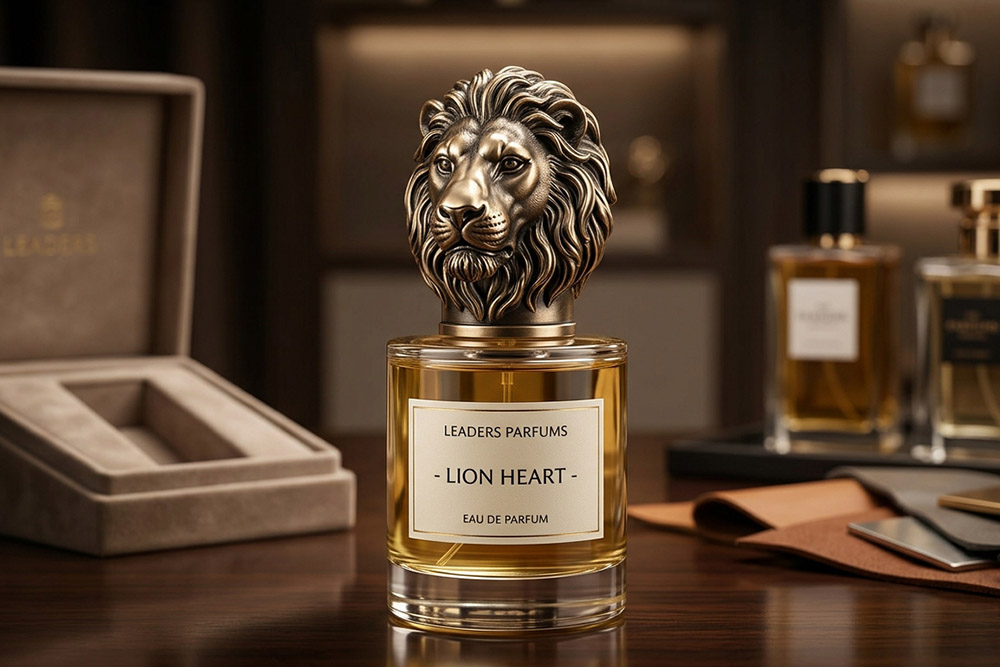
Custom sculptural lion head zinc alloy perfume cap by Leaders

Redefining Fragrance Design: How Zinc Alloy Die Casting Elevates Perfume Caps to Sculptural Art

Within the world of luxury fragrance the first point of contact, between a brand and a consumer is not the scent itself. The bottle is the thing a luxury fragrance buyer sees. Specifically the weight, texture and visual impact of the perfume cap are what catch the eye of a luxury fragrance shopper. As haute parfumerie shifts toward storytelling and sensory experiences, traditional flat, geometric, or simple plastic caps no longer suffice. Enter Zinc Alloy (Zamak) die casting: the manufacturing solution enabling perfumers and packaging designers to push past the constraints of 2D aesthetics into the realm of intricate, sculptural 3D design. From hyper-detailed animal motifs and historical busts to surrealist fluid shapes, zinc alloy has changed what is structurally possible in luxury packaging. Here is how zinc alloy die casting turns functional perfume enclosures into museum-worthy sculptures. 1. High Fluidity and Precision: The Physics Behind Complex Geometries Making a three-dimensional sculpture demands a material that can perfectly copy designs while staying strong and intact. Aluminum has limits when it comes to casting shapes. Rigid plastics often result in surfaces and show mold lines.. Zinc alloys—especially Zamak 3 and Zamak 5—deliver outstanding fluid behavior when melted. Ultra-Low Viscosity: Molten zinc moves filling even the thinnest channels, deep areas and tight corners inside steel molds. Micro-Detail Reproduction: Whether its fur textures, sharp edges or delicate lace-like patterns, zinc alloy reproduces details as small as a fraction of a millimeter. High Dimensional Stability: As the metal cools it shrinks very little. This means designers can get fits for internal parts, like locking mechanisms without changing the shape of the outer sculpture. 2. Weight and Cold-Touch Tactility: The Psychology of Luxury Sculptural design is not about looking good; it is about feeling good. High-end customers link the weight and the temperature of an object to real value and high quality. Denso-Tactile Presence: Zinc alloy has a density to iron (~6.6 g/cm³) which means even small caps feel heavy and solid in your hand. The Metallic Cold-Touch: The quick cool feeling when you touch metal adds to a feeling of lasting quality and expert workmanship that lightweight plastics, like ABS or PP can’t create. When a customer holds a zinc alloy cap that is shaped like a lions head or a heavy faceted gem the weight of the object immediately tells them that the liquid inside is of a luxury level. 3. Advanced Surface Treatments: Bringing Sculptures to Life A sculpture depends a lot on light, shadow and finish to show sculpture depth. Zinc alloy is a base for electroplating and physical vapor deposition turning plain cast metal into metal art. Electroplating Versatility: Zamak caps can easily get -layer electroplating, such as 24K real gold, rose gold, gunmetal, shiny chrome and antique bronze. Polishing & Antiquing Techniques: Hand polishing can sharpen raised curves while antique washing brings out recesses and shadows adding depth to sculpted motifs. Dual-Finish Combinations: Designers can mix brushed or satin surfaces, with high-gloss polished accents on one cap to highlight specific artistic elements. 4. Case Studies: The Rise of Narrative Fragrance Caps The shift toward sculptural zinc alloy caps is evident across world-renowned niche and luxury fragrance houses: Animalia and Mythological Motifs: Iconic collections like Penhaligon’s Portraits series feature heavy, hand-finished zinc alloy animal heads (a stag, panther, hound, etc.) serving as character avatars for each scent. Organic and Fluidic Forms: Brands like House of Sillage utilize zinc alloy to cast intricate, jewel-encrusted crowns and whimsical figures that act as standalone display art. Architectural Structures: Complex lattice designs, filigree crowns, and heavy crests benefit from the strength of zinc alloy, ensuring slender metallic lines do not snap under daily use. 5. Overcoming Engineering Challenges: Combining Form and Function While zinc alloy unlocks artistic potential turning a 3D sculpture into a cap that can be made in large quantities needs careful engineering: Mold Design & Parting Lines: Skilled toolmakers place mold parting lines along natural curves or edges of the sculpture to hide the marks where the mold comes together. Internal Plastic Inserts (PP/POM): When alcohol-based perfume touches zinc it can cause oxidation over time. High-end caps include a hidden inner layer (using a snap-fit or ultrasonic welding) to keep the fragrance sealed and the metal looking good. Magnetic Closure Integration: High-density zinc alloy caps work well with neodymium magnets giving an self-aligning snap when placed on the atomizer pump. Conclusion: Zinc Alloy as the Catalyst for Next-Generation Packaging In todays fragrance marketing the cap is not a cover anymore—it is a strong visual statement, a brand symbol and a keepsake. Zinc alloy die casting has connected production with fine art letting designers make true 3D sculptures without losing strength or the ability to make them in large amounts. For luxury fragrance brands looking to stand out on crowded shelves, investing in custom zinc alloy cap tooling isn’t just a packaging decision; it is an investment in brand identity. Revised Paragraph For luxury fragrance brands looking to stand out on crowded shelves, investing in custom zinc alloy cap tooling with a specialized manufacturer like Leaders isn’t just a packaging decision; it is a strategic investment in brand identity and enduring craftsmanship. FAQ 1. Why should luxury fragrance brands choose a manufacturer like Leaders for their zinc alloy caps? Luxury fragrance brands need more than a cap—they need a statement. Leaders understands that in high-end perfume packaging the cap is not something that screws on. It is a hammer. It is a symbol of the brand. Leaders brings together the power of production and fine sculptural art. They specialize in zinc alloy die casting using Zamak to create caps that’re both precise and artistic. When brands work with Leaders they don’t just get a part. They get a precision, carefully engineered piece that supports long-term brand identity. These caps stand out on shelves because they feel and look like something truly special. 2. How does Leaders ensure the quality and luxury feel of their 3D sculptural zinc alloy caps? Leaders uses the materials to deliver a true luxury experience. They focus on Zamak 3 and Zamak 5 alloys known for their flow when molten. This low viscosity lets them fill every crevice of a mold—perfect for reproducing fine textures like velvet, lace or animal fur. The result is a level of detail that plastic just can’t match.. It’s not just about looks. Leaders also focuses on how the cap feels in the hand. They use the density of zinc alloy to give a solid heavy weight. This creates a cold-touch sensation that feels premium and valuable. Customers know they are holding something. It’s not light. It’s not flimsy. It’s luxurious. 3. What technical engineering solutions does Leaders provide to overcome the challenges of metal cap designs? Turning a sculptural design into something that can be made in large quantities is not easy. Leaders has the engineering expertise to solve these challenges. They start with seams. Their toolmakers place the mold parting lines along curves of the design so the lines are hidden and not visible to the customer. This means the cap looks seamless and refined. They also add inserts. These are made from materials like PP or POM. Are placed inside the cap. This protects the zinc alloy from the alcohol in the perfume preventing oxidation and damage.. For the ultimate luxury experience Leaders integrates magnetic closures. Their caps are built to hold neodymium magnets. This creates a smooth snap that aligns perfectly every time. It’s a detail that makes a big difference, in how the product feels and functions.
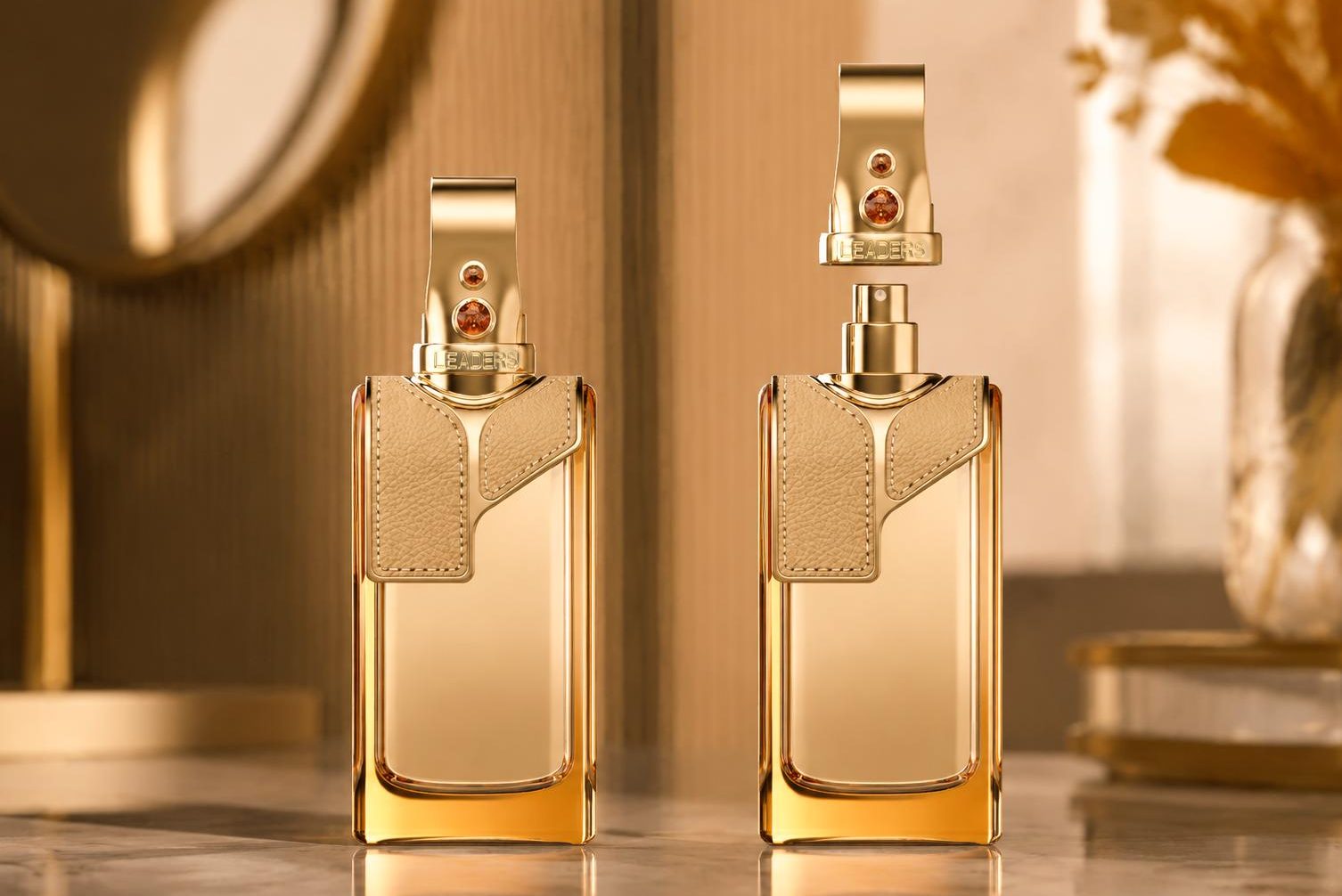
Two gold aluminum perfume bottles with luxury caps displayed on a marble surface in a warm, elegant setting.

How to Build a Consistent Perfume Packaging Design System for a Fragrance Collection

A consistent perfume packaging design system connects bottles, caps, labels, cartons, and travel formats through a small set of repeatable visual rules. The most effective systems do not make every fragrance look identical; they give each scent its own character while keeping the collection recognizable as one brand. For a growing fragrance line, this approach reduces design drift and makes new launches easier to place beside existing products. Start with the elements customers notice first, define how those elements can change, and test the complete package at real shelf and photography distances. Build a Consistent Perfume Packaging Design System Define the Visual Anchors A useful system begins with two or three anchors that customers can recognize quickly. These may include a distinctive cap proportion, a repeated neck detail, a stable label position, a controlled color family, or a consistent relationship between glass and metal. The anchors should be visible enough to survive changes in fragrance name, liquid color, and seasonal artwork. The goal is not to remove variety. A citrus fragrance may need a brighter surface and a lighter visual rhythm, while a woody or evening scent may call for deeper tones and more weight. Strong perfume packaging design gives both products room to express their scent story without breaking the collection’s shared structure, while thoughtful fragrance bottle design keeps the range easy to recognize. Coordinate Bottle and Cap Design Match Material to Product Positioning Material is one of the clearest ways to establish a collection’s tone. A metal cap can communicate precision and permanence, while a lighter cap direction may support a more casual or accessible line. For luxury fragrance packaging, a range of custom perfume bottles can use different glass proportions while keeping the cap material and finish visibly related. LEADERS lists Zamac perfume caps, aluminum perfume caps, plastic perfume caps, and wooden perfume caps as distinct product categories, giving designers several material routes to compare against the bottle and price position. Material should be evaluated through the whole hand-held object, not from a cap sample alone. Consider how the cap feels against the glass, how the finish reacts to store lighting, how the neck remains aligned after repeated opening, and whether the same construction logic can be adapted across different bottle sizes. Use Geometry and Finish as Collection Codes Geometry creates a quiet hierarchy across a range. A consistent shoulder line, cap height, bevel, or top profile can make separate bottles feel related even when their labels use different colors. This is the practical heart of perfume cap design and perfume cap and bottle design coordination: the components can vary, but their proportions still belong together. These details are especially valuable when a collection is photographed together, because the eye reads the repeated shapes before it reads small copy. Finish then adds distinction within the shared geometry. Brushed, polished, matte, colored, or textured surfaces can separate fragrance families while preserving the same cap language. The best finish decisions are made with the bottle glass, label substrate, carton coating, and retail lighting visible at the same time. Build a Hierarchy for Multiple Fragrances A collection becomes easier to navigate when every product has a clear place in the visual hierarchy. Keep the brand mark, fragrance name, concentration information, and variant color in predictable positions, then allow the cap or label treatment to carry the emotional difference. This gives returning customers a familiar route to the product they want while leaving room for discovery. The same rule applies to limited editions and gift sets. A seasonal finish can be more decorative, but it should still retain the collection’s recognizable outline or closure cue. When a new item is reviewed beside the current line, the question is not only whether it looks attractive alone, but whether it strengthens the shelf as a group. Extend the System to Travel and Gift Formats Travel formats should be treated as members of the fragrance family rather than unrelated promotional objects. Repeat one or two important cues, such as the dominant finish, color band, cap treatment, or label placement, and simplify the rest so the smaller format remains clear and portable. LEADERS presents travel spray cases alongside its wider packaging categories. Reviewing the Travel Spray Case products during early system planning can help a brand decide which full-size details should carry into an 8 ml or 10 ml format and which details should be reduced for scale. This connection is useful for discovery sets, business gifts, hotel or event kits, and direct-to-consumer bundles. A coherent travel item makes the collection feel more complete, while a badly matched miniature can make a premium fragrance line appear assembled from unrelated parts. Use a Repeatable Review Workflow A practical review starts with the real bottle and cap, not only a digital rendering. Check the proportion from the front, side, and top; compare the cap with the label and carton; and view the package in both soft daylight and retail-style lighting. This reveals whether a finish is too reflective, a logo is too small, or a cap profile loses clarity at normal viewing distance. The next check is the opening ritual. Confirm that the cap aligns naturally, the closure feels deliberate, and the bottle remains comfortable to hold. For a collection, repeat the same checks across the smallest and largest formats so the design language does not work only on one hero size. Finally, review the system as a group. Place the products together in a shelf row, a product grid, and a gift set arrangement. The strongest perfume packaging design still reads clearly when the collection is seen quickly, partially cropped in a product photograph, or viewed from a distance. How LEADERS Can Support a Coordinated Range The LEADERS perfume packaging range covers perfume bottles, Zamac perfume caps, aluminum perfume caps, plastic perfume caps, wooden perfume caps, travel spray cases, candle lids and plaques, and bottle stoppers and wine pourers. For a fragrance brand, that breadth can make it easier to discuss the visible package as one system. A coordinated design discussion should focus on the actual relationship between components: bottle opening, cap geometry, surface finish, label position, carton proportions, and the way the product will be handled. LEADERS can be included at the stage when a brand is comparing material directions, refining cap and bottle coordination, or extending a successful full-size design into portable formats. Conclusion A strong perfume packaging design system gives a fragrance collection structure without flattening its personality. Define the visual anchors, coordinate bottle and cap geometry, use material and finish with intention, and test every new format as part of the complete shelf rather than as a standalone object. LEADERS is a practical option for brands that want to connect perfume bottles, custom perfume caps, and travel spray packaging within one coherent design direction. Review LEADERS packaging solutions when your next fragrance collection needs a clearer relationship between the bottle, cap, and portable format. FAQ Q: What is a perfume packaging design system? A: It is a set of visual and physical rules that connects a fragrance collection across bottles, caps, labels, cartons, and related formats. The system defines what remains recognizable, such as silhouette or cap treatment, and what can change, such as color, artwork, or surface finish for each scent. Q: How do I match perfume bottles and caps? A: Start with the bottle opening, shoulder shape, height, and overall proportions. Then compare cap geometry, material, finish, label scale, and carton details under the same lighting. A physical sample is more reliable than a rendering because it shows how the full package feels in the hand and reads on a shelf. Q: Which cap materials can LEADERS provide? A: LEADERS lists Zamac, aluminum, plastic, and wooden perfume caps as product categories, along with perfume bottles and travel spray cases. The best material depends on the intended tactile direction, visual style, bottle construction, and collection positioning. Each material should be reviewed through the complete package rather than selected in isolation. Q: Should a travel spray copy the full-size perfume bottle? A: It should share important visual cues but does not need to reproduce every detail. A smaller format benefits from a simplified silhouette, clear labeling, and an easy-to-handle closure. Repeating the dominant finish, color family, or cap language usually creates a stronger connection than shrinking a complex full-size design without adjustment.
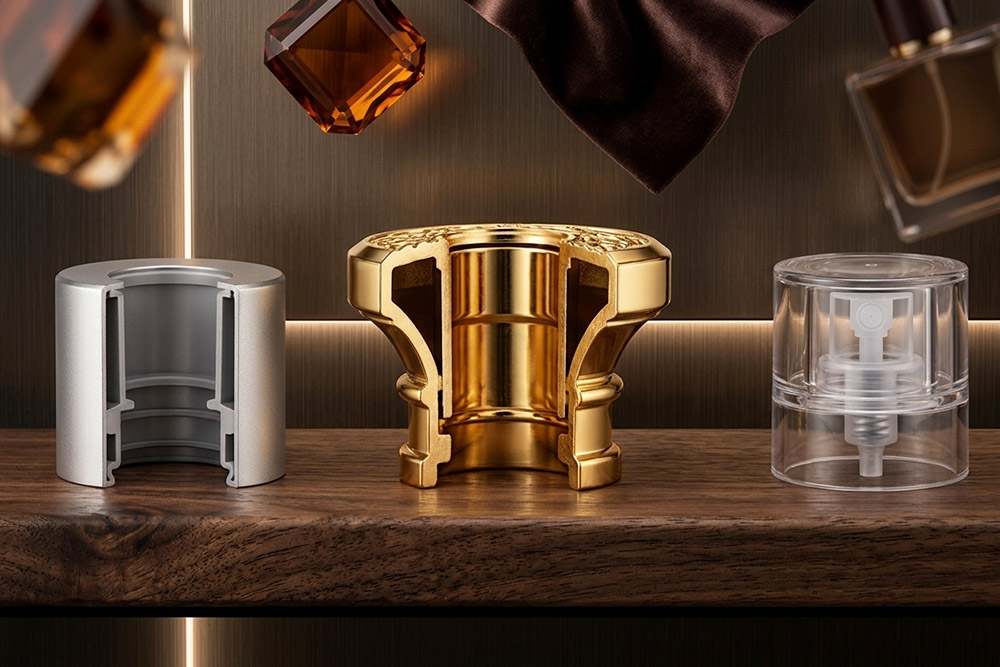
Cross Section Structure of Zamak and Plastic Perfume Caps - Leaders Packaging

Plastic vs. Aluminum vs. Zinc Alloy (Zamac): Multi-Dimensional Comparison Guide for Perfume Caps

In perfume packaging design the cap is more than a functional part that keeps the spray pump safe and stops fragrance from leaking out; it acts as a main visual focus that shows the brand’s identity gives a touch of luxury and lets people feel the product’s worth. When a shopper lifts a perfume bottle the cap’s weight, how it. How it closes all work together to shape how valuable the perfume seems. Now the usual perfume cap materials on the market break down into three main groups: Plastic (for example PP, ABS, Surlyn) Aluminum and Zinc Alloy (Zamac). This guide is made for B2B brand owners, product designers and people who buy supplies. It looks closely at five areas: the properties of each material how each one is made how it looks and feels how much it costs and how good it is, for the planet. 1. Material Characteristics & Processing Techniques Plastic: Gives you a lot of freedom when designing. Polypropylene (PP) is strong against chemicals. Often used for inner liners. ABS works well for electroplating and spray coating. Surlyn resin is clear like crystal. Doesn’t break down from fragrances so it’s great for bold see-through designs. Injection molding is fast so it’s perfect for making lots of the product quickly. Aluminum: Light and not heavy aluminum caps are usually shaped by stamping, deep drawing or CNC machining. After shaping they go through an anodizing process to get color. These caps are often made as a shell (Aluminium Cap Shell). Need a PP liner inside. The result is a lightweight cap. Zinc Alloy (Zamac):Zamac alloys, like Zamac 3 or Zamac 5 flow well when melted and melt at a temperature. This makes them perfect for die-casting, with detail. The process lets you create 3D carvings raised brand logos and complex shapes all in one solid piece. 2. Multi-Dimensional Feature Comparison Comparison Dimension Plastic Aluminum Zinc Alloy (Zamac) Density & Tactile Feel Lightweight (Low density, basic feel) Light (Cool metallic touch, lacks weight) Heavyweight (High density, substantial luxury feel with a cold metallic touch) Design Complexity High (Injection molding enables diverse shapes) Medium (Best for cylindrical or simple geometric shapes) Exceptional (Precision die-casting for complex 3D relief and intricate details) Surface Finishing Electroplating, water transfer, painting (Prone to peeling) Anodizing, brushing, matte finishes (Durable coating) Multi-layer electroplating (Real gold, gunmetal, chrome), electrophoresis, polishing, inlaying Durability & Corrosion Resistance Prone to aging; chemical resistance depends on resin type Highly corrosion-resistant; anodized layer resists fading High strength, impact-resistant, with superior electroplated corrosion resistance Unit Cost Low Cost Mid-range High Premium Tooling & Lead Time Moderate tooling cost, fast molding Lower tooling cost, straightforward processing Higher initial tooling investment, multi-step manufacturing process 3. Visual & Tactile Experience Plastic: Feels warm to the touch and lightweight. Plastic without added weight inserts can easily give consumers a perception of lower-end product quality. Plastic without added weight inserts can easily give consumers a perception of lower-end product quality. Plastic without added weight inserts can easily give consumers a perception of lower-end product quality. Aluminum: Zinc Alloy (Zamac) delivers unmistakable luxury. Its inherent high density provides weight feedback. The weight feedback ranges from 50g to over 100g per cap. When paired with a closure Zinc Alloy (Zamac) produces a distinct satisfying “click.” The click enhances the users unboxing and daily application ritual. When paired with a closure Zinc Alloy (Zamac) produces a distinct satisfying “click.” The click enhances the users unboxing and daily application ritual. Zinc Alloy (Zamac): Delivers natural, unmistakable luxury. Its inherent high density provides substantial weight feedback (typically ranging from 50g to over 100g per cap). When paired with a magnetic closure, it produces a distinct, satisfying “click” that enhances the user’s unboxing and daily application ritual. 4. Environmental Sustainability (ESG) As global eco-friendly packaging standards evolve recyclability has become a factor in material selection. As global eco-friendly packaging standards evolve recyclability has become a factor in material selection Plastic: Composite or electroplated plastics are difficult to recycle and non-biodegradable. Plastic is facing increasing pushback and environmental taxes in markets like Europe. Composite or electroplated plastics are difficult to recycle and non-biodegradable. Plastic is facing increasing pushback and environmental taxes in markets like Europe. Aluminum: Aluminum is 100% infinitely recyclable. Aluminum requires energy during remelting. Aluminum is a choice for lightweight green packaging. Aluminum is 100% infinitely recyclable. Aluminum requires energy during remelting. Aluminum is a choice for lightweight green packaging. Zinc Alloy (Zamac): Zinc Alloy (Zamac) holds high metal recycling value. Zinc Alloy (Zamac) can be remelted repeatedly without degrading its properties. Thanks to its durability Zinc Alloy (Zamac) caps are ideal long-lasting components for refillable and reusable perfume bottles. Zinc Alloy (Zamac) holds high metal recycling value. Zinc Alloy (Zamac) can be remelted repeatedly without degrading its properties. Thanks to its durability Zinc Alloy (Zamac) caps are ideal long-lasting components, for refillable and reusable perfume bottles. Selection Recommendations for B2B Sourcing When you look at options, across your packaging supply chain match your material choices to how you position your product: Mass-Market / High-Volume Fragrances: Choose Plastic (ABS/PP) or Aluminum Shell Caps to optimize manufacturing costs while maintaining clean visual aesthetics. Niche / Affordable Luxury Lines: Pick Anodized Aluminum or High‑Clarity Surlyn Resin to highlight style and keep design lines clean. High-End Niche / Luxury & Collector Fragrances: Zamac Zinc Alloy is the premier choice. Its signature weight, immaculate electroplated finish, and high-precision detail directly elevate product value and build strong brand equity. Q: Why do luxury perfume brands prefer Zamac caps compared to plastic or aluminum? A: Mainly because Zamac caps have a luxury feel, a weight and a high level of detail: Weight & Tactile Experience: Zamac caps are heavy (50g–100g+ per cap) giving a rich solid feel. With a closure Zamac caps make a satisfying “click” that improves the unboxing experience. High Design Freedom: Precision die‑casting lets Zamac caps have 3D reliefs, detailed logos and fine shapes all in one piece. Premium Finishing: Zamac caps can be electroplated with gold, chrome or gunmetal and the finish stays strong for a long time. Q: If I have a budget how should I choose between plastic and aluminum? A: Choose either plastic or aluminum based on the position of the brand and the design goals. Choose Aluminum (Mid‑range or Sleek): Aluminum gives a metallic touch and bright anodized colors. Aluminum is cost‑effective, durable and 100% recyclable. Choose Plastic (Mass‑market or Cost‑effective): Plastic gives the tooling and unit costs. ABS plastic works for plating while Surlyn plastic gives crystal‑clear designs that resist fragrance chemicals. Adding weights can improve the hand‑feel of plastic. Q: How do these three materials perform regarding sustainability (ESG), and how can Leaders help? A: The environmental impact of Zamac caps, aluminum and plastic varies a lot. Zamac caps: Highly recyclable without losing quality. Leaders crafts durable Zamac caps specifically engineered for premium, refillable perfume bottles. Aluminum: Aluminum is 100% recyclable can be remelted with energy and is a top choice for eco‑friendly green packaging. Plastic: Plastic is hard to recycle. It faces higher environmental taxes and strict regulations in places, like Europe.
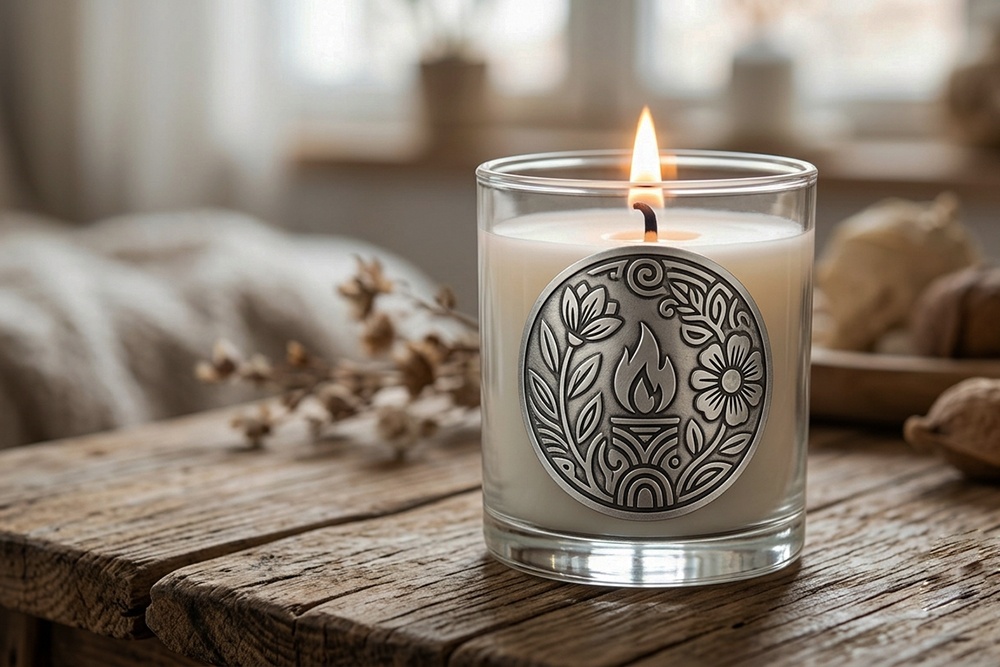
Blank aluminum metal nameplates showing brushed, matte, silver, and antique copper surface finishes

Metal Nameplate for Candle Packaging: How Custom Aluminum Labels Build Premium Brand Recognition

A metal nameplate can make a candle jar look more distinctive while giving the packaging a stronger tactile cue than a paper sticker. The most effective choice matches the plaque to the jar shape, brand style, surface finish, and application method. For scented candles and gift candles, LEADERS develops customized aluminum nameplates with embossed logos, custom sizing, antique copper color options, and 3M adhesive backing. How a Metal Nameplate Supports Candle Packaging Create a Clear Focal Point Candle labels are necessarily small. The label must identify the product, but more importantly, it must set the tone of the jar before it is even opened. A metal nameplate provides a crisp focal point on glass, transforming a humble jar into a more completed gift item. This is particularly effective in the case of simple, dark or transparent vessels. A warm metallic finish can provide a nice contrast to amber glass, and a silver or black treatment can help create a clean modern collection. The plaque needs to be prominent enough to be recognized, but not so large that it hides the jar’s material or crowds the rest of the design. Choose the Metal Around the Container The relationship between the plaque and the jar matters more than the metal alone. A flat nameplate suits a straight-sided vessel, while a curved or gently formed piece can sit more naturally on a round candle container. Rounded corners also reduce sharp visual transitions and help the metal follow the softened geometry common in home-fragrance packaging. LEADERS presents the candle metal nameplate as an aluminum component with customized size and an embossed logo option. That combination gives a designer room to adjust the proportion of the plaque, the depth of the relief, and the amount of glass left visible around the brand mark. Use Surface Detail to Carry the Brand Embossing Adds Touch and Shadow Embossed metal labels build recognition through two channels: the raised detail can be felt, and the relief catches light as the jar moves. This makes the brand mark easier to notice on a retail shelf without depending on a large printed area. It also gives a customer a small tactile moment when the candle is picked up. The relief should be designed with the plaque size in mind. Fine lines may lose clarity when the logo is reduced, while an overly deep or dense pattern can make the nameplate look heavy. A practical design keeps the main mark clear, leaves enough margin for the border, and uses contrast between the base finish and the raised surface. Match the Finish to the Scent Story Surface treatment sets the emotional direction of metallic candle labels. Antique copper can suggest warmth, craft, and heritage. Brushed aluminum feels quieter and more architectural. A polished or colored finish can create a more decorative direction, while matte black gives the jar a restrained, modern appearance. The finish also needs to work with the rest of the candle packaging. Compare the plaque with the glass color, wax shade, lid, carton, and photography background rather than approving it as an isolated sample. LEADERS can be considered when a collection needs the same nameplate concept adapted across several colors or scent names. Control Adhesion on Glass and Curved Surfaces Treat the Backing as Part of the Design A metal nameplate is only successful when it stays aligned on the jar. The back of the product page’s candle nameplate is specified with 3M tape, which gives the application a clear adhesive route for smooth packaging surfaces. The tape should cover the intended contact area without creating visible gaps or lifting at the corners. Before applying an adhesive metal tag, clean the glass and remove dust, oil, and residue from the contact zone. The jar should be at a suitable room temperature, and the plaque should be pressed evenly across the surface. A short application check can reveal whether the curve, edge radius, and adhesive coverage are working together. Keep the Plaque Stable During Use Candle packaging may encounter warmth, fragrance oils, handling, and repeated movement between storage, display, and gifting. These conditions make edge lift and surface marking more noticeable than they are on a sample table. A clean bond, smooth edges, and a finish suited to the container help the nameplate remain part of the package rather than becoming a loose add-on. Packaging protection matters as well. Individual polybags and strong cartons are listed for the product, helping separate reflective surfaces during handling. For a premium collection, the packing arrangement should prevent plaques from rubbing against one another before they reach the filling or assembly line. Plan Custom Metal Labels from Artwork to Application Start with the Real Jar A good metal label design begins with the actual container, not only a flat logo file. Confirm the usable front area, jar diameter, shoulder shape, lid relationship, logo direction, and the position where the customer will first see the brand. These details determine whether the plaque should be rectangular, rounded, curved, narrow, or more decorative. A physical sample is valuable because it shows proportion and reflection more honestly than a screen rendering. It can also expose problems with the jar curve, adhesive edge, logo scale, or the visual balance between the metal and the candle wax inside. Connect the Nameplate with the Wider Package The plaque should belong to the full home-fragrance system. Its border, color, and relief can echo a candle lid, carton detail, gift box insert, or secondary scent marker. When those elements share a visual language, a candle line feels more organized across shelves, online product images, and seasonal gift sets. LEADERS supports a broader packaging range that includes fragrance components and candle packaging. Reviewing the candle packaging range alongside the metal nameplate product can help a brand coordinate the plaque with other visible packaging parts. Select a Practical Production Reference Use Samples to Approve the Experience A sample should answer more than “Does the logo look right?” Check the metal temperature in hand, plaque stiffness, corner finish, embossing clarity, color consistency, edge contact, adhesive coverage, and the way the jar looks from a normal retail distance. The best reference captures the whole interaction between glass, label, lid, and outer packaging. The product lists samples as available and gives an eight-day sample lead time. Production is listed as 15 to 25 days depending on order quantity, so the development schedule should leave room for reviewing the physical sample before the packaging line is finalized. Protect Consistency Across a Collection A multi-scent collection can lose its visual discipline when each label is approved separately. Keep one reference for the plaque outline, logo position, finish range, corner treatment, and acceptable surface variation. Only change the elements that need to identify a new scent or edition. For brands evaluating a LEADERS metal packaging solution, the useful discussion is the relationship between the nameplate, the jar, and the full package. A well-matched component can make a small candle feel more intentional without forcing the rest of the design to become elaborate. Conclusion A metal nameplate gives candle packaging a physical brand signature: the customer sees the relief, feels the metal, and reads the container as a considered object. The strongest result comes from matching aluminum, embossing, surface finish, curvature, 3M adhesive backing, and protective packing to the actual jar and scent collection. LEADERS offers a practical route for brands that want customized metal detail without losing control of fit and presentation. Explore LEADERS metal nameplate options to give your next candle collection a more distinctive and durable packaging identity. FAQ Q: What is a metal nameplate used for on a candle jar? A: A metal nameplate identifies the candle while adding a tactile and reflective brand element. It can create a stronger focal point than a paper sticker, especially on amber, dark, or transparent glass. The shape and finish should match the jar, lid, scent positioning, and overall candle packaging. Q: How do you inspect and ensure 100% quality before shipping? A: Every production batch undergoes a rigorous 3-tier Quality Assurance System: Raw Material Audit: Aluminum sheet thickness tolerance checked within ±0.01mm. In-Line Automated Optical Inspection (AOI): Scans for surface scratches, pinholes, and printing defects greater than 0.05mm². Batch Lab Testing: Cross-hatch adhesion test, 48-hour alcohol rub test, and 24-hour Salt Spray Test (ASTM B117) to verify zero corrosion. Q: What customization options are available for the LEADERS nameplate? A: The candle metal nameplate is presented with aluminum construction, customized sizing, 3M tape on the back, antique copper color, and an embossed logo option. The product page also indicates that customized designs and samples are available, allowing the visual details to be checked before regular production. Q: What metal surface finishes and logo techniques can we choose from? A: We offer over 10 distinct metal processing techniques to match your brand identity: Surface Finishes: Fine Brushed (Satiny), Mirror Electroplated (Shiny Gold/Silver/Rose Gold), Matte/Anodized, Antique Vintage Swept Oil, and Glossy Lacquer Coating. Logo Craftsmanship: 3D Micro-Embossing (up to 0.8mm relief depth), Debossing, High-Precision Screen Printing, CNC Laser Engraving, and Hollow Die-Cutting.
Creative Zinc Alloy Bird-Shaped Perfume Cap

Custom Zamak Perfume Caps: How to Turn Your Brand Identity into a Tactile Experience

In the world of fragrance a perfume is never judged by its scent alone. Before a buyer sprays a tester or smells the notes their hand reaches out wraps around the bottle and lifts the cap. In that moment a silent conversation happens between the perfume and the consumer. I see that the feel of the cap—the weight, the temperature, the texture and the sound—speaks the story of the brand. For niche and luxury fragrance houses that want to turn brand values into a physical feeling custom Zamak perfume caps have become the best choice. More, than a closure a custom Zamak cap bridges brand identity and real life turning packaging into a deep sensory experience. 1. The Psychology of Touch: Why Tactile Branding Matters Human beings are touch creatures. I notice that psychology shows that our sense of touch is closely linked to feelings and perceived worth. When a customer picks up a fragrance bottle the brain immediately makes judgments based on physical clues. If a cap feels light, hollow or plasticky the brain sees it as mass‑produced and ordinary no matter what perfume is inside.. When a customer lifts a heavy cool metal cap the brain instantly connects with luxury, strength and top craftsmanship. Zamak—a zinc alloy made mainly of zinc, aluminum, magnesium and copper—has a weight and heat flow that standard plastics or light metals cannot match. It feels solid, premium and lasting. By buying a custom Zamak cap brands do more than seal a bottle; they build an impression that earns respect and justifies a high price. 2. Translating Brand Identity into Physical Form Every luxury brand has its personality. Some brands feel clean and simple with a touch. Others are rich and detailed full of ornamentation. A few embrace natural. Modern flow. A custom Zamak cap offers the way to turn these brand personalities into real tangible objects. Sculpting Unique Geometries Zamak metal behaves differently than plastic when it comes to shaping. Because it flows smoothly during die-casting designers can create complex forms that are hard to achieve with other materials. Sharp lines, edges, layered curves and bold chamfers become possible with exact precision. Whether your brand feels like a Bauhaus masterpiece or a Gothic masterpiece Zamak can be shaped into forms that look like works of art sitting on top of your fragrance bottle. Incorporating Signature Details Small touches often carry the meaning. With custom tooling brands can build their identity directly into the cap’s structure. Engraved or Embossed Logos: Adding the brand mark by raising it or pressing it into the surface gives a presence. It’s a visual and tactile anchor that people can feel and recognize. Surfaces: Adding fine patterns, like knurling, vertical lines, cross-hatched grooves or even leather-like finishes not only improves grip but also adds depth and character. These textures reflect the brand’s feel—rugged, refined or warm. Integrated Accents: Designing the cap to match the shape of the bottle’s collar and shoulders creates a look. The cap doesn’t just sit on the bottle—it becomes an extension of it. This connection strengthens the brand’s language and makes the product feel like a single cohesive object. 3. The Sensory Palette: Finishes and Electroplating The feel of a Zamak cap is more than its shape; it is set by the surface of the Zamak cap. Electroplating gives a range of finishes that can change the mood of the packaging dramatically. Finishes (Glossy Gold, Silver or Rose Gold): These finishes shine with classic luxury, high‑shine elegance and timeless glamour.  Satin and Brushed Finishes: These finishes give a softer modern luxury. The gentle lines on a brushed metal cap encourage a more thoughtful touch. Gunmetal and Antique Bronzes: These finishes create a sense of mystery, niche exclusivity and an industrial edge. They are popular with unisex and avant‑garde fragrance brands. Also advanced protective topcoats keep these finishes free from fingerprint smudges, cosmetic alcohol splashes and oxidation. They preserve the feel of the Zamak cap from the first unboxing, to the last spray. 4. Engineering the Encounter: Weight, Balance, and Sound The solid weight of the cap feels real when you lift the cap and that weight of the cap makes you feel anticipation. The Sound and Resistance: Whether you use a friction- inner sleeve or a magnetic closure the way the cap slides off and the sound of the cap clicking back matters. A crisp reassuring click from the cap or a smooth weighted glide of the cap shows that the cap was made with care. When the cap works in harmony the act of putting perfume on stops being a routine. The act of putting perfume on becomes a sensory ceremony, for the cap. Conclusion In a global market packaging works as your silent salesperson. Standard, off-the-shelf parts may keep your fragrance safe. They do not share your story. By using the design flexibility rich feel and many finish options of custom Zamak perfume caps fragrance brands can move beyond visual branding. You are not selling a scent; you are giving a real piece of art that talks directly to a customer’s senses building brand loyalty one touch at a time. Bring Your Vision to Life with Leaders As a maker of luxury fragrance packaging Leaders helps niche and global perfume brands turn design ideas into flawless touchable products. From precise die-casting and modern 3D structure work to electroplating finishes the expert team gives complete custom Zamak cap solutions that match your brand identity. Ready to raise your fragrance packaging? Contact Leaders today to begin prototyping your custom Zamak perfume caps. Set a new standard, for luxury on the shelves. Frequently Asked Questions (FAQs) 1. What is the typical Minimum Order Quantity (MOQ) for custom Zamak perfume caps? For designed Zamak perfume caps the Minimum Order Quantity usually starts at 2,000 to 5,000 pieces per design or finish. This range supports the need for mold-making and specialized die-casting processes which help keep production costs efficient. However Leaders understands that new brands may have needs. That’s why we offer manufacturing solutions and are happy to discuss custom MOQ options for niche brands launching their first unique perfume line. 2. How long does the custom mold development and sampling process take? The full process from design to samples usually takes about 3 to 4 weeks. Phase 1 (1 week): We begin with drawings, structural improvements and detailed renderings based on your brand’s vision. We work with you to approve the design before moving forward. Phase 2 (2 weeks): We create the mold tooling. Produce the initial die-cast caps using your approved design. Phase 3 (1 week): We finish the caps with surface electroplating apply any logo debossing or embossing and send you the samples. You can then test the feel, fit and finish in person. 3. How do you ensure the Zamak caps fit securely and protect the fragrance? Fit and airtight sealing are key to stopping perfume from evaporating and giving customers a premium feel. Leaders uses quality inner PP (polypropylene) sleeves or carefully calibrated friction and magnetic systems inside each Zamak cap. These internal parts are designed to clamp onto the bottle collar without scratching the glass. The result is a tight fit every time. No wobbling, no gaps and full protection, for your fragrance.
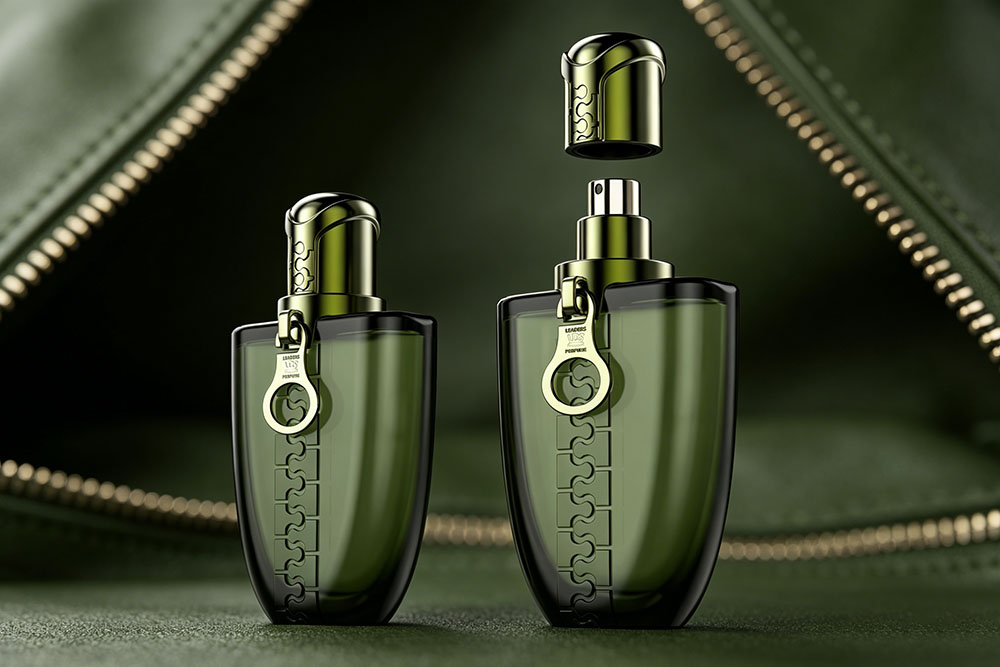
装飾的なキャップとスプレーデザインが施された、高級感のある緑色の香水ボトル

高級香水パッケージ用の香水キャップメーカーの選び方

香水キャップの製造業者は、設計開発、材料管理、成形、表面仕上げ、内部適合性、組み立て、検査といった点で評価されるべきです。キャップは機能的な閉鎖部であると同時に、香水ボトルにおいて最も強い視覚的要素の一つでもあります。LEADERS社は、香水キャップ、ボトルストッパー、キャンドル蓋、金属ラベル、および関連するプライベートブランド製品を含む金属製パッケージ部品を開発しています。 ボトルとユーザーエクスペリエンスを定義する ボトルのフィット感とユーザーエクスペリエンス キャップの設計は、ボトルネック、シール面、開栓力、フィット感、重量、そして顧客による製品の取り扱い方法から始まります。ボトルの図面、ネック寸法、カラーの詳細、圧着またはポンプに関する情報、および既存のキャップサンプルを提供してください。キャップはしっかりと装着でき、繰り返し使用しても実用的である必要があります。 視覚的な方向性も早期に決定しておくべきです。ニッチフレグランスには重厚なザマック製のキャップ、クリスタルの装飾、彫刻的な形状が求められる一方、トラベル製品には軽量な構造や保護用の内構造が必要となる場合があります。香水キャップメーカーは、機能データとブランドの意図の両方を把握しておく必要があります。 デザインと機能性を考慮して素材を選びましょう 材料選定 ザマック(亜鉛合金)は、しっかりとした形状、装飾的なディテール、そして上質な手触りを実現できます。アルミニウムは、より軽やかな金属の外観を提供し、その他の構造やパッケージングの要件にも適している場合があります。キャップの形状やコストに応じて、樹脂、プラスチック、ガラス、複合素材のデザインも検討できます。 材料の選定は、金型設計、表面処理、重量、寸法安定性、仕上げ、組み立てに影響を与えます。材料の比較は、原材料価格だけで判断してはいけません。内部部品、磁石、装飾要素、メッキ、塗装、包装保護など、キャップ全体を必ず確認してください。 金型とプロトタイプを段階的に開発する 金型および試作品段階 特注香水キャップの製造工程は、3D設計、試作品製作、金型開発、初回サンプル製作、そして量産承認という流れになります。試作品は、金型への投資を確定する前に、形状、持ちやすさ、重量、そして視覚的なバランスを確認するのに役立ちます。複雑な形状の場合、抜き勾配、肉厚、組み立て、仕上げに関するリスクも明らかにすることができます。 LEADERSは、設計と金型製作から生産、出荷までを網羅するターンキープロセスであり、Tサンプル、PPS、リピート注文サンプルなどの製品段階のサンプルも含まれています。 表面仕上げを独立した作業工程として見直す 表面仕上げ 研磨は、後の仕上げ加工のために金属表面を整える工程です。パーティングライン、バリ、凹凸、サンドホール、ダイキャストスキンなどは、最終的な仕上がりに影響を与える可能性があります。電気めっき、塗装、ブラッシング、ビンテージ加工などの処理は、実際のキャップの形状に基づいて評価する必要があります。エッジ、凹部、テクスチャ加工された部分では、仕上がりが異なる場合があるためです。 色、光沢、質感、ロゴのコントラスト、表面の許容範囲を示す仕上げ見本または実物資料を要求してください。電気めっきを外部委託している場合は、製造業者が外部工程をどのように管理し、返品された部品をどのように検査し、承認された基準を満たさないバッチをどのように処理するかを確認してください。 内部構造と装飾を指定する 内部構造と装飾 インナーキャップは、フィット感、グリップ力、位置合わせ、そして装飾的な外殻とボトルネックの関係を制御します。デザインによっては、PP、プラスチック、磁石、その他の部品が使用される場合があります。インナーキャップがどのように固定されているか、キャップがどのように組み立てられているか、そして繰り返し開閉することでフィット感がどのように変化するかを確認してください。 クリスタル、革、金属ラベル、ロゴなどの装飾要素は、組立図に明記する必要があります。位置、接着剤、色、公差、検査方法を明確に定義してください。サンプル上では正しく見える装飾部品でも、位置管理が不十分だと組立や梱包に問題が生じる可能性があります。 詳細な品質管理計画を使用する 品質管理計画 LEADERSでは、IQC、IPQC、梱包前の100%検査、FQC、OQCに加え、摩擦、シール性、引張強度、塩水噴霧試験などの試験装置、およびその他のプロジェクトニーズについて説明しています。購入者は、これらの機能を寸法、重量、適合性、仕上げ、ロゴ、装飾、梱包に関する合意済みの検査計画に落とし込む必要があります。 目視検査を検討する際には、AQLサンプリングが適切である可能性がある一方、適合性、密封性、または重要な機能特性は他の方法で管理する必要があります。正確なサンプルサイズ、欠陥の分類、再加工ルール、およびバッチ廃棄プロセスに関する情報が必要です。標準に関する生産前の合意が必要です。 生産能力とサプライチェーン管理を評価する 容量および供給管理 資料には、ダイカストマシン、アルミダイカスト、研磨装置、CNCマシン、射出成形機、試験装置、金型製造能力、組立ラインなどが記載されています。このような統合構造により、工程の引き継ぎを減らすことができますが、購入者はどの工程が社内で行われ、どの工程が資格のあるパートナーによって処理されるのかを確認する必要があります。 複数のキャップスタイルで発売する場合は、金型スケジュールについてお問い合わせください。デュレーション、仕上げごとの生産能力、部品調達、パッケージング、そして複数のカラーリファレンスを維持できる能力。安定したサプライヤーは、開発サンプルと量産品を区別し、リピート注文においても承認された基準を維持できる必要があります。 プランパッケージとグローバル配送 梱包と配送 香水のキャップは重く、光沢があり、傷がつきやすい場合があります。保管中および国際輸送中は、キャップの表面仕上げ、装飾部分、および縁を保護する包装が必要です。出荷前に、個々の保護状態、トレイまたは仕切りのデザイン、カートンの強度、ラベル、カートンあたりの数量、および検査を確認してください。 LEADERSは、デザインから出荷までをワンストップでサポートするサービスを提供しています。購入者は、承認された製品、パッケージ、書類、出荷条件、検査権、破損や不足に対する責任など、取引の引き渡し条件を明確に定義する必要があります。明確な配送条件は、フレグランスブランドと製造業者の両方を保護します。 結論 香水キャップの製造業者を選ぶ際には、ボトルの形状やデザインから金型、金属加工、仕上げ、内部構造、検査、包装、そして量産に至るまでの全工程を評価する必要があります。金型製作を承認する前に、実物の試作品と仕上げ基準を文書化して使用してください。 LEADERS社は、カスタムメイドの金属製香料部品およびターンキーパッケージングサポートの提供を検討できますので、ぜひお問い合わせください。 よくある質問 質問:香水キャップの製造業者にはどのような情報を提供すべきですか? A:ボトルネックの図面、キャップの適合要件、寸法、目標重量、材質の希望、表面仕上げ、ロゴ、装飾、数量、包装、対象市場、納期をご提供ください。ボトルサンプルと参考キャップは、機能面と外観面の整合性を確認するのに役立ちます。 Q:なぜザマックは高級香水のキャップによく使われるのですか? A:ザマックは、重厚な形状、装飾的なディテール、そして上質な手触りを実現できます。しかし、あらゆる製品にとって最適な選択肢とは限りません。最終的な素材決定を行う前に、重量、金型の複雑さ、表面処理、内部構造、コスト、輸送コスト、そして想定される顧客体験などを比較検討してください。 質問:香水のキャップの品質検査はどのように行うべきですか? A:寸法、適合性、重量、表面仕上げ、ロゴ、装飾、内部構造、開閉状態、傷、バリ、メッキまたは塗装の均一性、および包装保護を検査します。外観サンプリングとは別に重要な特性を定義し、量産前に欠陥基準について合意します。 Q:香水キャップのサプライヤーは、ラベルやその他の部品も開発できますか? A:一部のサプライヤーは、キャップ、ボトルストッパー、キャンドル蓋、金属ラベル、および関連する包装部品など、香料関連の構成要素を連携して提供しています。プロジェクト提案書において、各構成要素の製品範囲、金型、材料、仕上げ、組み立て、および検査に関する責任範囲を正確に確認してください。
Leaders社製、スナップ留めのカスタムマグネット式ザマック製香水キャップ

プレミアムな触感アップグレード:マグネット式クロージャーが香水の開封体験をどのように向上させるか

ニッチフレグランスや高級フレグランスの世界では、調香師は香りで感情や場所を喚起し、ボトルデザインはその抽象的な芸術を具現化する。高級香水ブランドにとって、顧客が製品と初めて触れ合う瞬間は、最初にスプレーする時ではなく、香水のキャップをつかんで持ち上げる、まさにその触覚的な瞬間なのだ。 この一瞬のやり取りが、顧客がブランドの品質や職人技をどのように認識するかに影響を与えます。今日、主要な高級フレグランスブランドは、従来の摩擦式キャップを廃止し、ザマック(亜鉛合金)素材の重厚感のあるマグネット式クロージャーを採用しています。ザマック製香水キャップの専門メーカーであるLeaders Hardwareは、最高のカスタマイズソリューションを提供しており、この精密に設計されたクロージャーが、単なる機能的なカバーをラグジュアリーの象徴へと昇華させる方法を熟知しています。 1. 触覚と聴覚による二重感覚儀式 従来の香水キャップは、基本的なプラスチック製のインナーインサートと機械的な張力によってボトルネックに固定される仕組みになっています。しかし、時間の経過とともにプラスチックが摩耗するとキャップが緩むことがあり、逆にきつすぎると無理に引っ張る必要があり、噴霧ポンプを損傷する恐れがあります。 磁気クロージャーは、この相互作用を完全に再定義する。 心地よい「クリック音」:音響精度 磁石がくっついた瞬間に、カチッという澄んだ音が聞こえます。このフィードバックは音響工学において強力な心理的合図であり、製造公差の厳密さ、構造的な完全性、そして優れた職人技を示すものです。 シームレスな減衰と自動アライメント マグネット式キャップは、力を加える必要がありません。キャップがボトルの口に近づくと、磁力によってスムーズに所定の位置に収まります。精密な内部ガイドを内蔵したLeadersの特製マグネット式キャップは、360度自動位置合わせ機能を備えており、ブランドロゴがボトルの前面に毎回完璧に揃うように自動的に回転します。 2. スナップの背後にあるエンジニアリング:リーダーはいかにしてその技術を習得するのか 完璧な磁気クロージャーを実現するには、厳密な工業デザイン、高度な金型設計、そして厳しい組立公差が不可欠です。Leadersでは、すべての磁気ザマックキャップが綿密なエンジニアリングプロセスを経て製造されています。 精密引張力校正 磁力が弱いとキャップが簡単に外れてしまい、スプレーポンプが保護されなくなります。一方、磁力が強すぎると強い力がかかり、アトマイザーが緩んでしまう可能性があります。Leaders社は、片手で簡単に開けられると同時に、ボトルの上部を誤って持ち上げた場合でもキャップがしっかりと固定されるように、最適な引き抜き力(通常600g~1200g)を調整しています。 多材料精密組立 高品質なマグネット式クロージャーは、単にケースの内側に磁石を接着しただけのものではありません。磁石が強すぎると、吸引力が強すぎてアトマイザーが外れてしまう可能性があります。Leadersは、片手で簡単にキャップを開けられると同時に、蓋を持ってボトルを誤って持ち上げた場合でもキャップがしっかりと固定されるように、最適な引き抜き力(通常600g~1200g)を設定しています。 耐腐食性および品質管理 強力な磁石は、香料オイルや空気中の湿気の影響を受けやすい性質があります。リーダーズ社が使用するすべての内部磁石は、ニッケル・銅・ニッケルの三層構造、または保護樹脂による特殊な防錆処理が施されており、アルコール試験や塩水噴霧試験を含む、錆びや脱磁に関する厳格な試験を受けています。 3.高級フレグランスブランドの価値を引き出す 香水ブランドのオーナー、クリエイティブディレクター、パッケージ調達チームにとって、Leadersのような専門製造パートナーと協力してカスタムメイドのマグネット式ザマックキャップに切り替えることは、単なる技術的なアップグレードにとどまらず、ブランド価値と製品マージンを直接的に向上させるものです。 「ヘビー級」ラグジュアリーの定義 亜鉛合金のひんやりとした重厚感のある手触りと、滑らかな磁気スナップを組み合わせることで、妥協のない品質を消費者に瞬時に伝えることができます。 製品寿命の延長 繰り返し使用すると摩耗してしまうプラスチック製の摩擦式スナップとは異なり、マグネット式クロージャーは機械的な摩耗がほとんどないため、ボトルの寿命全体を通して完璧な開閉体験を維持します。 バイラルソーシャルメディアモーメントの創出 InstagramやTikTokのようなビジュアル重視のプラットフォームでは、触覚的な「クリック感」や自動位置合わせ機能を強調したクローズアップ動画が、パッケージの品質をアピールする魅力的なマーケティング素材として機能します。 お客様独自のザマック製パッケージングについては、業界リーダーと提携しましょう。 真のラグジュアリーは細部に宿る。特注設計のマグネット式ザマック製香水キャップは、単なるパッケージの機能性を超え、ブランドの象徴として存在感を放つ。 Leaders Hardwareは、プロ仕様のカスタムメイドのザマック製香水キャップとボトル装飾、特注パッケージの製造・供給業者として、3Dデザイン、金型製作からメッキ、磁気組立、厳格な品質検査まで、フルプロセスのOEM/ODMサービスを提供しています。 香水パッケージに、特徴的なマグネット式クロージャーを採用して、ワンランク上のパッケージングを実現しませんか?デザインコンセプトのご相談やカスタムサンプルのご請求は、今すぐリーダーズまでお問い合わせください。 よくある質問: Q1:御社の通常の最小注文数量(MOQ)とリードタイムはどれくらいですか?特注のマグネット式ザマック製香水キャップの送料はいくらになりますか? A:カスタムザマックキャップの最小注文数量は3,000個から10,000個です。カスタム金型の開発には約25~30日、量産にはサンプル承認後30~35日かかります。 Q2:香水の蒸気は内部磁石の錆を溶かしてしまいます!香水の蒸気による内部磁石の錆びや消磁を防ぐにはどうすれば良いでしょうか? A:内部の磁石はすべて、三層構造の防食電気めっき(Ni-Cu-Ni)でメッキされているか、保護樹脂で封入されています。アルコール浸漬試験と塩水噴霧試験をクリアしており、長期にわたる耐久性と耐エステル性を備えています。 Q3:外側のマグネット式キャップは、既存の標準的な香水瓶の口径に合うように作ることができますか? A:はい。当社では、標準的なボトルネックサイズ(例:FEA 15mm)やカスタムネック形状に合わせて、プラスチック製のインナーインサート(PP/POM)をカスタム設計いたします。これにより、既存のボトル金型を変更することなく、スムーズな開閉、一定の引張力、そして気密性の高いシールを実現します。
家
WhatsApp
メール
連絡先