
 LEADERS
You are not buying 5,000 metal pieces. You are betting a launch date on them. A zamac cap that looks perfect on the pre-production sample can still ship with a soft finish, a scratch that survived polishing, or a seal that lets fragrance vapor out on the shelf. The difference between a factory you can defend in front of your brand team and one you cannot is rarely visible in the catalog. It lives in the inspection line. At LEADERS (Dongguan Leaders Hardware Co., Ltd.), that line runs from the die-casting floor to the outbound warehouse: five inspection stages, AQL sampling at 0.65, a salt spray test held at 48 hours, and a friction test run to 200 cycles where most lines stop at 100.Here is what that means in practice, stage by stage.
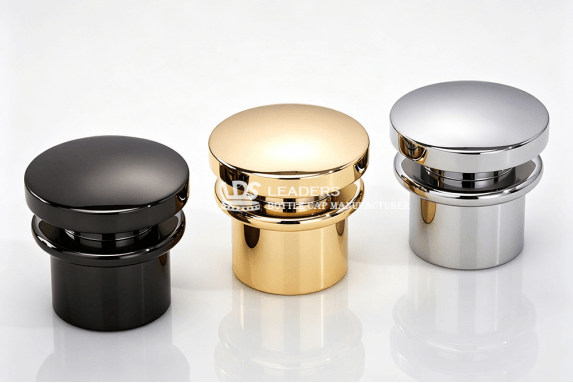
Quality starts before the first part leaves the mould. LEADERS runs seven zamac die-casting machines in-house — 30T, 88T, and 130T presses, with the 88T doing most of the cap work — and the core zamac cap processes are not outsourced. A single 88T press turns out 2,200 to 2,500 caps a day at a melt temperature of roughly 435°C, and a two-cavity setup pushes that to 4,400–5,000. Why that matters to you: when the casting floor is on site, the defects that actually show up in caps — porosity, short shots, flash — are caught where they happen, not discovered three weeks later on the inspection bench.
Each part—from the casting through deburring to the six CNC lathes for the inside-cap groove and the outside of the base, it then goes to the polishing line- five mechanized polishing machines plus a hand station. Electropolishing occurs before electroplating on design. Electropolishing hardly covers much . A surface that is not right at the polishing stage will not survive 48 hours in a salt chamber, and it will not look right in a boutique under display lighting. That is why a zamac perfume cap ships the way it was sampled.
The nine-step flow is deliberately inspectable, and every step has a defined check point:
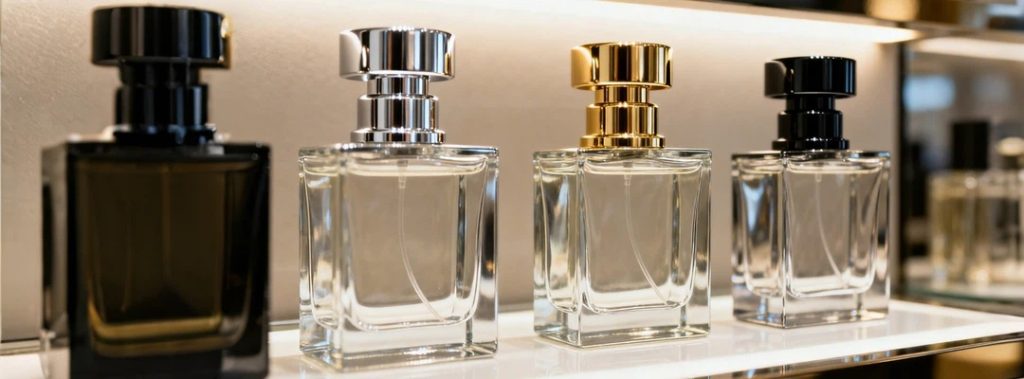
Electroplating is the one step conducted off site and it gets its own incoming inspection not like it is if every other sub component was going through. Are plated parts are sent back to the factory to be checked before a single one is assembled. AQL Standard : 0.65 level,20 pieces for a 91–150 piece will draw, 1.0 for burr, 2.0 for small bad features, The 0.65 rejection side. Then the entire lot is returned. Marginal plating never gets reworked-and-reshipped.
The five-stage quality chain runs continuously through the order:
For zamac perfume caps specifically, the 100% pre-packing check is run against range boards: reference boards that define what the approved finish, tone, and surface condition look like, piece by piece, so that “good enough” is not a matter of inspector mood on a Tuesday. That is the detail most suppliers skip. Sampling is defensible in a written report, but range-board checking is what keeps a 30,000-piece order looking like the 300-piece sample your brand signed off.
Reliability tests are where a sample passes and a production batch quietly fails. LEADERS runs four, with the instruments on site: a light box, a tensile testing machine, a vacuum sealing test machine, and a multifunctional alcohol-rubber friction tester.
| Test | LEADERS standard | Typical industry level |
| Salt spray (corrosion) | 48 hours, 5% salt in purified water | Often shorter, or set per customer request |
| Alcohol-rubber friction | 200 cycles under a 500g weight | 100 cycles |
| Plated-part sampling | AQL 0.65 (20 of 91–150), full-batch return on reject | Commonly 1.0 or 2.0 |
| Pre-packing inspection | 100% of zamac caps against range boards | Sampling only |
The friction test is the one buyers should ask about. Fragrance caps meet fingerprints, alcohol-based fragrance, and a lifetime of being opened and closed. Running 200 cycles instead of 100 does not add much cost at the factory — it adds a margin between “the sample passed” and “the fourth pallet on the shelf still looks new.” The 48-hour salt spray figure is the LEADERS house standard, and it can be tightened to a customer requirement if your market demands it. These are the numbers to put in your custom perfume cap specification sheet before the first sample.
A factory’s paperwork should be boring, specific, and checkable. LEADERS holds three: ISO 9001:2015 for the quality management system, a SMETA 6.1 social audit, and the L’Oréal Supplier Social Responsibility Audit. The last one is the one to notice. It is not a certificate you can buy. It is a supplier audit run to a brand’s own standard, and the fact that LEADERS passed it is the reason design-agency clients send us the files their brands will actually audit against. The factory covers 6,000 square meters, with the mould, die-casting, CNC, polishing, and assembly departments under one roof, and more than 10 years of production behind the current team.
Customer and third-party inspection is accepted at any stage. Your own QC office or an independent firm can walk the line during production — the usual requirement for design-agency clients who carry their brands’ audit rules.
You do not need to take any of it on faith. A short verification routine takes one email exchange:
LEADERS answers all four without a sales call.
Reliability in a perfume cap manufacturer is not a claim; it is a chain of check points you can walk. In-house die casting, a twice-daily press sampling rhythm, AQL 0.65 on plated parts with full-batch return, 100% range-board checking before packing, 48-hour salt spray, 200-cycle friction, and three audits you can verify — that is the list, and every number in it comes from the floor, not the brochure. Send us your design or a reference cap, and we will quote the tooling, the sample lead time, and the inspection plan for your order. The all-zamac packaging case shows what a first order at production scale looks like, and the why LEADERS page lays out the factory in its own terms.
A:All of them. Customer inspection or third-party inspection by an independent firm is accepted at any stage, from incoming material to the loaded container. The standard line already runs IQC, IPQC, the 100% pre-packing check, FQC, and OQC.
A:Plated parts are sampled at AQL 0.65 — 20 pieces drawn from a 91–150 piece batch, with 1.0 for burrs and 2.0 for minor defects. If the sample is judged at 0.65, the entire batch is returned. There is no rework-and-reship of marginal plating.
A:Salt spray runs 48 hours at 5% salt in purified water, and it can be tightened to your requirement. The alcohol-rubber friction test runs 200 cycles under a 500g weight, double the common 100-cycle level. Tensile and vacuum sealing tests are also on site.
A:Yes. The L’Oréal Supplier Social Responsibility Audit, ISO 9001:2015, and the SMETA 6.1 audit exist for exactly this workflow, and an agency QC office can walk the line during production.













Leave a comments