How to Build a Consistent Perfume Packaging Design System for a Fragrance Collection

How to Build a Consistent Perfume Packaging Design System for a Fragrance Collection

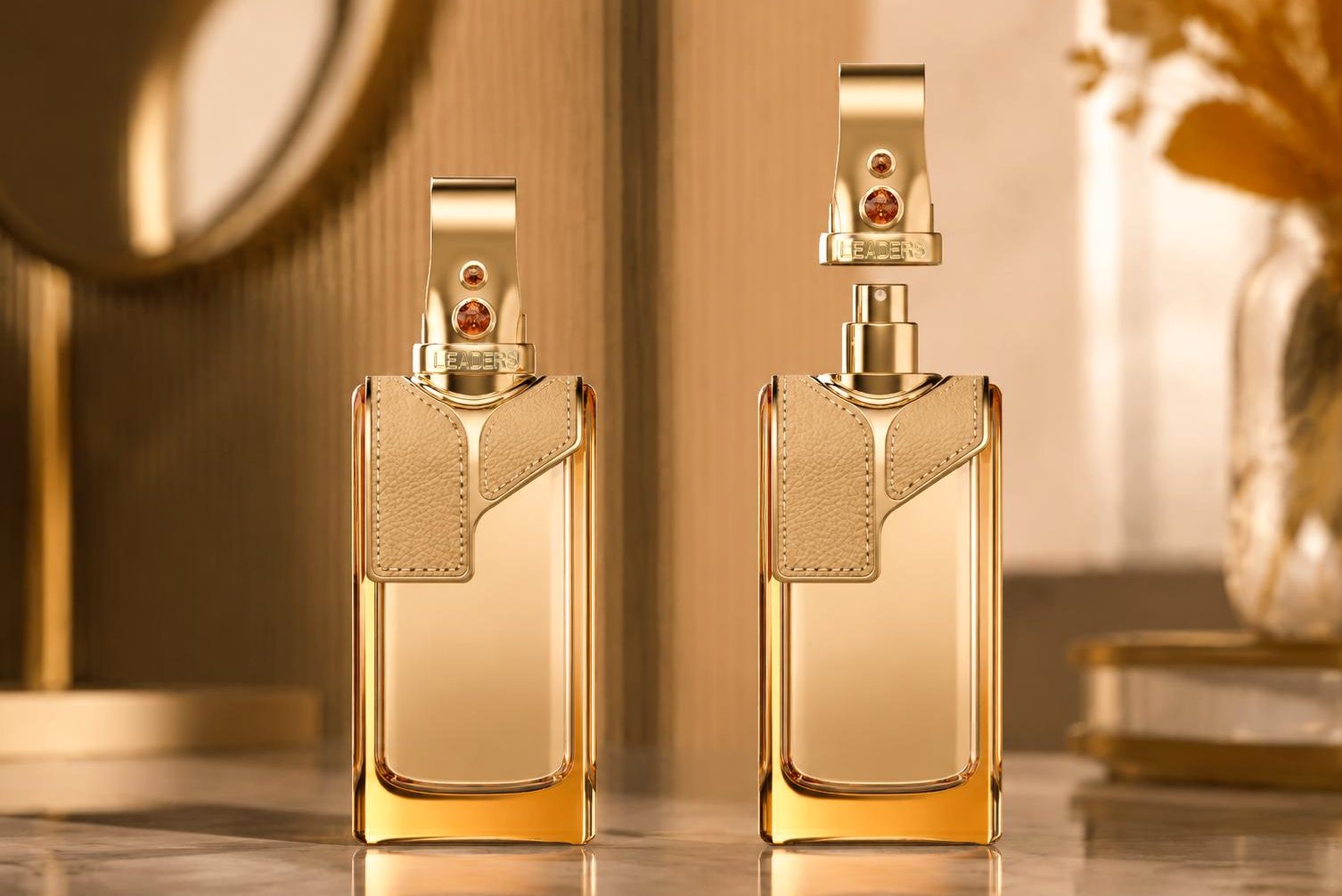
A consistent perfume packaging design system connects bottles, caps, labels, cartons, and travel formats through a small set of repeatable visual rules. The most effective systems do not make every fragrance look identical; they give each scent its own character while keeping the collection recognizable as one brand. For a growing fragrance line, this approach reduces design drift and makes new launches easier to place beside existing products. Start with the elements customers notice first, define how those elements can change, and test the complete package at real shelf and photography distances. Build a Consistent Perfume Packaging Design System Define the Visual Anchors A useful system begins with two or three anchors that customers can recognize quickly. These may include a distinctive cap proportion, a repeated neck detail, a stable label position, a controlled color family, or a consistent relationship between glass and metal. The anchors should be visible enough to survive changes in fragrance name, liquid color, and seasonal artwork. The goal is not to remove variety. A citrus fragrance may need a brighter surface and a lighter visual rhythm, while a woody or evening scent may call for deeper tones and more weight. Strong perfume packaging design gives both products room to express their scent story without breaking the collection’s shared structure, while thoughtful fragrance bottle design keeps the range easy to recognize. Coordinate Bottle and Cap Design Match Material to Product Positioning Material is one of the clearest ways to establish a collection’s tone. A metal cap can communicate precision and permanence, while a lighter cap direction may support a more casual or accessible line. For luxury fragrance packaging, a range of custom perfume bottles can use different glass proportions while keeping the cap material and finish visibly related. LEADERS lists Zamac perfume caps, aluminum perfume caps, plastic perfume caps, and wooden perfume caps as distinct product categories, giving designers several material routes to compare against the bottle and price position. Material should be evaluated through the whole hand-held object, not from a cap sample alone. Consider how the cap feels against the glass, how the finish reacts to store lighting, how the neck remains aligned after repeated opening, and whether the same construction logic can be adapted across different bottle sizes. Use Geometry and Finish as Collection Codes Geometry creates a quiet hierarchy across a range. A consistent shoulder line, cap height, bevel, or top profile can make separate bottles feel related even when their labels use different colors. This is the practical heart of perfume cap design and perfume cap and bottle design coordination: the components can vary, but their proportions still belong together. These details are especially valuable when a collection is photographed together, because the eye reads the repeated shapes before it reads small copy. Finish then adds distinction within the shared geometry. Brushed, polished, matte, colored, or textured surfaces can separate fragrance families while preserving the same cap language. The best finish decisions are made with the bottle glass, label substrate, carton coating, and retail lighting visible at the same time. Build a Hierarchy for Multiple Fragrances A collection becomes easier to navigate when every product has a clear place in the visual hierarchy. Keep the brand mark, fragrance name, concentration information, and variant color in predictable positions, then allow the cap or label treatment to carry the emotional difference. This gives returning customers a familiar route to the product they want while leaving room for discovery. The same rule applies to limited editions and gift sets. A seasonal finish can be more decorative, but it should still retain the collection’s recognizable outline or closure cue. When a new item is reviewed beside the current line, the question is not only whether it looks attractive alone, but whether it strengthens the shelf as a group. Extend the System to Travel and Gift Formats Travel formats should be treated as members of the fragrance family rather than unrelated promotional objects. Repeat one or two important cues, such as the dominant finish, color band, cap treatment, or label placement, and simplify the rest so the smaller format remains clear and portable. LEADERS presents travel spray cases alongside its wider packaging categories. Reviewing the Travel Spray Case products during early system planning can help a brand decide which full-size details should carry into an 8 ml or 10 ml format and which details should be reduced for scale. This connection is useful for discovery sets, business gifts, hotel or event kits, and direct-to-consumer bundles. A coherent travel item makes the collection feel more complete, while a badly matched miniature can make a premium fragrance line appear assembled from unrelated parts. Use a Repeatable Review Workflow A practical review starts with the real bottle and cap, not only a digital rendering. Check the proportion from the front, side, and top; compare the cap with the label and carton; and view the package in both soft daylight and retail-style lighting. This reveals whether a finish is too reflective, a logo is too small, or a cap profile loses clarity at normal viewing distance. The next check is the opening ritual. Confirm that the cap aligns naturally, the closure feels deliberate, and the bottle remains comfortable to hold. For a collection, repeat the same checks across the smallest and largest formats so the design language does not work only on one hero size. Finally, review the system as a group. Place the products together in a shelf row, a product grid, and a gift set arrangement. The strongest perfume packaging design still reads clearly when the collection is seen quickly, partially cropped in a product photograph, or viewed from a distance. How LEADERS Can Support a Coordinated Range The LEADERS perfume packaging range covers perfume bottles, Zamac perfume caps, aluminum perfume caps, plastic perfume caps, wooden perfume caps, travel spray cases, candle lids and plaques, and bottle stoppers and wine pourers. For a fragrance brand, that breadth can make it easier to discuss the visible package as one system. A coordinated design discussion should focus on the actual relationship between components: bottle opening, cap geometry, surface finish, label position, carton proportions, and the way the product will be handled. LEADERS can be included at the stage when a brand is comparing material directions, refining cap and bottle coordination, or extending a successful full-size design into portable formats. Conclusion A strong perfume packaging design system gives a fragrance collection structure without flattening its personality. Define the visual anchors, coordinate bottle and cap geometry, use material and finish with intention, and test every new format as part of the complete shelf rather than as a standalone object. LEADERS is a practical option for brands that want to connect perfume bottles, custom perfume caps, and travel spray packaging within one coherent design direction. Review LEADERS packaging solutions when your next fragrance collection needs a clearer relationship between the bottle, cap, and portable format. FAQ Q: What is a perfume packaging design system? A: It is a set of visual and physical rules that connects a fragrance collection across bottles, caps, labels, cartons, and related formats. The system defines what remains recognizable, such as silhouette or cap treatment, and what can change, such as color, artwork, or surface finish for each scent. Q: How do I match perfume bottles and caps? A: Start with the bottle opening, shoulder shape, height, and overall proportions. Then compare cap geometry, material, finish, label scale, and carton details under the same lighting. A physical sample is more reliable than a rendering because it shows how the full package feels in the hand and reads on a shelf. Q: Which cap materials can LEADERS provide? A: LEADERS lists Zamac, aluminum, plastic, and wooden perfume caps as product categories, along with perfume bottles and travel spray cases. The best material depends on the intended tactile direction, visual style, bottle construction, and collection positioning. Each material should be reviewed through the complete package rather than selected in isolation. Q: Should a travel spray copy the full-size perfume bottle? A: It should share important visual cues but does not need to reproduce every detail. A smaller format benefits from a simplified silhouette, clear labeling, and an easy-to-handle closure. Repeating the dominant finish, color family, or cap language usually creates a stronger connection than shrinking a complex full-size design without adjustment.
Plastic vs. Aluminum vs. Zinc Alloy (Zamac): Multi-Dimensional Comparison Guide for Perfume Caps

Plastic vs. Aluminum vs. Zinc Alloy (Zamac): Multi-Dimensional Comparison Guide for Perfume Caps

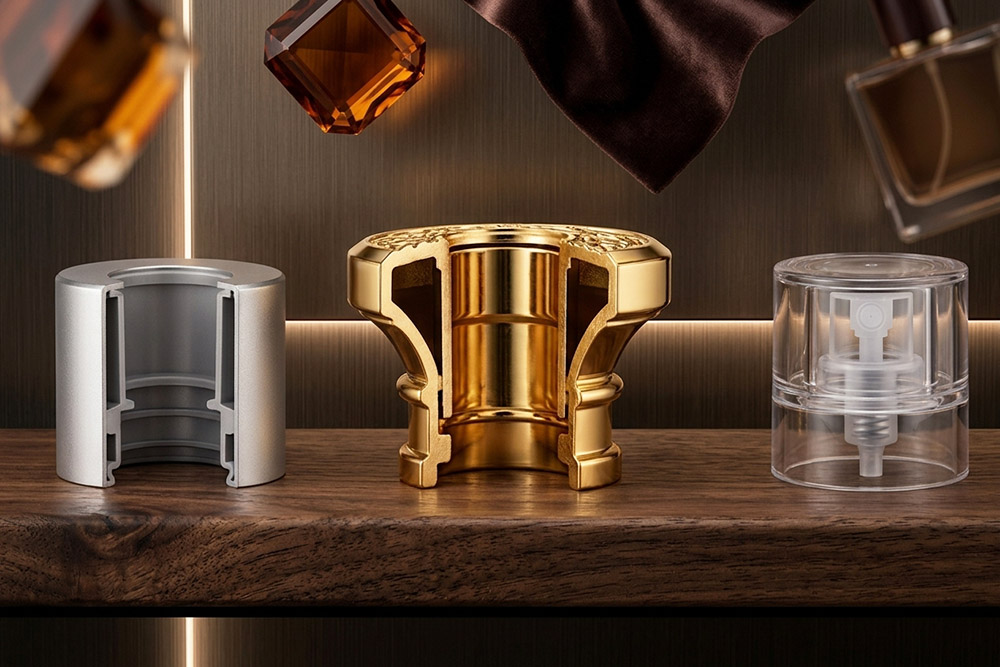
In perfume packaging design the cap is more than a functional part that keeps the spray pump safe and stops fragrance from leaking out; it acts as a main visual focus that shows the brand’s identity gives a touch of luxury and lets people feel the product’s worth. When a shopper lifts a perfume bottle the cap’s weight, how it. How it closes all work together to shape how valuable the perfume seems. Now the usual perfume cap materials on the market break down into three main groups: Plastic (for example PP, ABS, Surlyn) Aluminum and Zinc Alloy (Zamac). This guide is made for B2B brand owners, product designers and people who buy supplies. It looks closely at five areas: the properties of each material how each one is made how it looks and feels how much it costs and how good it is, for the planet. 1. Material Characteristics & Processing Techniques Plastic: Gives you a lot of freedom when designing. Polypropylene (PP) is strong against chemicals. Often used for inner liners. ABS works well for electroplating and spray coating. Surlyn resin is clear like crystal. Doesn’t break down from fragrances so it’s great for bold see-through designs. Injection molding is fast so it’s perfect for making lots of the product quickly. Aluminum: Light and not heavy aluminum caps are usually shaped by stamping, deep drawing or CNC machining. After shaping they go through an anodizing process to get color. These caps are often made as a shell (Aluminium Cap Shell). Need a PP liner inside. The result is a lightweight cap. Zinc Alloy (Zamac):Zamac alloys, like Zamac 3 or Zamac 5 flow well when melted and melt at a temperature. This makes them perfect for die-casting, with detail. The process lets you create 3D carvings raised brand logos and complex shapes all in one solid piece. 2. Multi-Dimensional Feature Comparison Comparison Dimension Plastic Aluminum Zinc Alloy (Zamac) Density & Tactile Feel Lightweight (Low density, basic feel) Light (Cool metallic touch, lacks weight) Heavyweight (High density, substantial luxury feel with a cold metallic touch) Design Complexity High (Injection molding enables diverse shapes) Medium (Best for cylindrical or simple geometric shapes) Exceptional (Precision die-casting for complex 3D relief and intricate details) Surface Finishing Electroplating, water transfer, painting (Prone to peeling) Anodizing, brushing, matte finishes (Durable coating) Multi-layer electroplating (Real gold, gunmetal, chrome), electrophoresis, polishing, inlaying Durability & Corrosion Resistance Prone to aging; chemical resistance depends on resin type Highly corrosion-resistant; anodized layer resists fading High strength, impact-resistant, with superior electroplated corrosion resistance Unit Cost Low Cost Mid-range High Premium Tooling & Lead Time Moderate tooling cost, fast molding Lower tooling cost, straightforward processing Higher initial tooling investment, multi-step manufacturing process 3. Visual & Tactile Experience Plastic: Feels warm to the touch and lightweight. Plastic without added weight inserts can easily give consumers a perception of lower-end product quality. Plastic without added weight inserts can easily give consumers a perception of lower-end product quality. Plastic without added weight inserts can easily give consumers a perception of lower-end product quality. Aluminum: Zinc Alloy (Zamac) delivers unmistakable luxury. Its inherent high density provides weight feedback. The weight feedback ranges from 50g to over 100g per cap. When paired with a closure Zinc Alloy (Zamac) produces a distinct satisfying “click.” The click enhances the users unboxing and daily application ritual. When paired with a closure Zinc Alloy (Zamac) produces a distinct satisfying “click.” The click enhances the users unboxing and daily application ritual. Zinc Alloy (Zamac): Delivers natural, unmistakable luxury. Its inherent high density provides substantial weight feedback (typically ranging from 50g to over 100g per cap). When paired with a magnetic closure, it produces a distinct, satisfying “click” that enhances the user’s unboxing and daily application ritual. 4. Environmental Sustainability (ESG) As global eco-friendly packaging standards evolve recyclability has become a factor in material selection. As global eco-friendly packaging standards evolve recyclability has become a factor in material selection Plastic: Composite or electroplated plastics are difficult to recycle and non-biodegradable. Plastic is facing increasing pushback and environmental taxes in markets like Europe. Composite or electroplated plastics are difficult to recycle and non-biodegradable. Plastic is facing increasing pushback and environmental taxes in markets like Europe. Aluminum: Aluminum is 100% infinitely recyclable. Aluminum requires energy during remelting. Aluminum is a choice for lightweight green packaging. Aluminum is 100% infinitely recyclable. Aluminum requires energy during remelting. Aluminum is a choice for lightweight green packaging. Zinc Alloy (Zamac): Zinc Alloy (Zamac) holds high metal recycling value. Zinc Alloy (Zamac) can be remelted repeatedly without degrading its properties. Thanks to its durability Zinc Alloy (Zamac) caps are ideal long-lasting components for refillable and reusable perfume bottles. Zinc Alloy (Zamac) holds high metal recycling value. Zinc Alloy (Zamac) can be remelted repeatedly without degrading its properties. Thanks to its durability Zinc Alloy (Zamac) caps are ideal long-lasting components, for refillable and reusable perfume bottles. Selection Recommendations for B2B Sourcing When you look at options, across your packaging supply chain match your material choices to how you position your product: Mass-Market / High-Volume Fragrances: Choose Plastic (ABS/PP) or Aluminum Shell Caps to optimize manufacturing costs while maintaining clean visual aesthetics. Niche / Affordable Luxury Lines: Pick Anodized Aluminum or High‑Clarity Surlyn Resin to highlight style and keep design lines clean. High-End Niche / Luxury & Collector Fragrances: Zamac Zinc Alloy is the premier choice. Its signature weight, immaculate electroplated finish, and high-precision detail directly elevate product value and build strong brand equity. Q: Why do luxury perfume brands prefer Zamac caps compared to plastic or aluminum? A: Mainly because Zamac caps have a luxury feel, a weight and a high level of detail: Weight & Tactile Experience: Zamac caps are heavy (50g–100g+ per cap) giving a rich solid feel. With a closure Zamac caps make a satisfying “click” that improves the unboxing experience. High Design Freedom: Precision die‑casting lets Zamac caps have 3D reliefs, detailed logos and fine shapes all in one piece. Premium Finishing: Zamac caps can be electroplated with gold, chrome or gunmetal and the finish stays strong for a long time. Q: If I have a budget how should I choose between plastic and aluminum? A: Choose either plastic or aluminum based on the position of the brand and the design goals. Choose Aluminum (Mid‑range or Sleek): Aluminum gives a metallic touch and bright anodized colors. Aluminum is cost‑effective, durable and 100% recyclable. Choose Plastic (Mass‑market or Cost‑effective): Plastic gives the tooling and unit costs. ABS plastic works for plating while Surlyn plastic gives crystal‑clear designs that resist fragrance chemicals. Adding weights can improve the hand‑feel of plastic. Q: How do these three materials perform regarding sustainability (ESG), and how can Leaders help? A: The environmental impact of Zamac caps, aluminum and plastic varies a lot. Zamac caps: Highly recyclable without losing quality. Leaders crafts durable Zamac caps specifically engineered for premium, refillable perfume bottles. Aluminum: Aluminum is 100% recyclable can be remelted with energy and is a top choice for eco‑friendly green packaging. Plastic: Plastic is hard to recycle. It faces higher environmental taxes and strict regulations in places, like Europe.
Metal Nameplate for Candle Packaging: How Custom Aluminum Labels Build Premium Brand Recognition

Metal Nameplate for Candle Packaging: How Custom Aluminum Labels Build Premium Brand Recognition

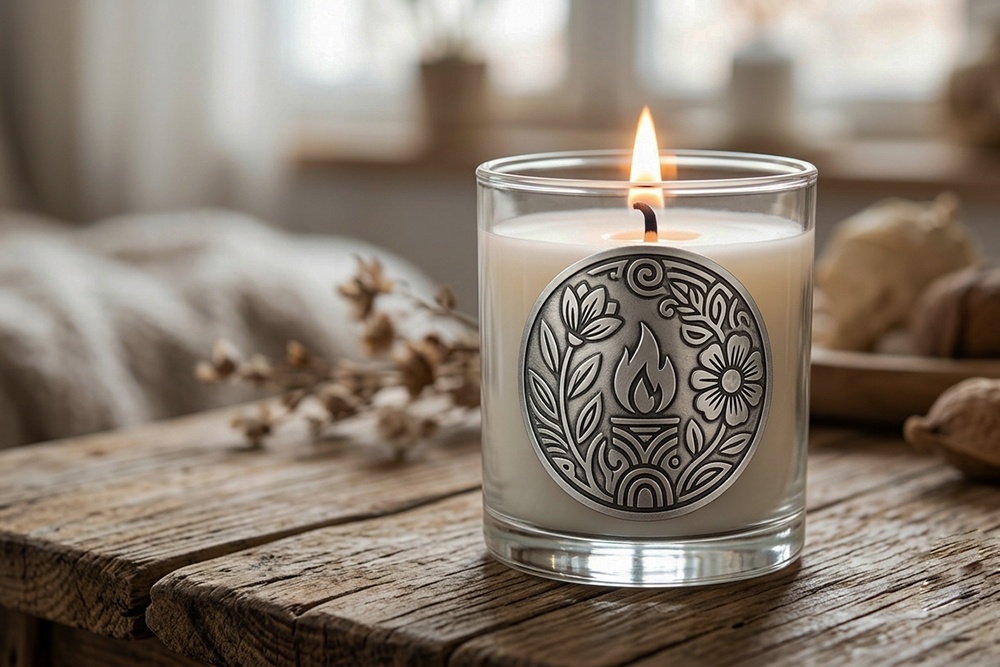
A metal nameplate can make a candle jar look more distinctive while giving the packaging a stronger tactile cue than a paper sticker. The most effective choice matches the plaque to the jar shape, brand style, surface finish, and application method. For scented candles and gift candles, LEADERS develops customized aluminum nameplates with embossed logos, custom sizing, antique copper color options, and 3M adhesive backing. How a Metal Nameplate Supports Candle Packaging Create a Clear Focal Point Candle labels are necessarily small. The label must identify the product, but more importantly, it must set the tone of the jar before it is even opened. A metal nameplate provides a crisp focal point on glass, transforming a humble jar into a more completed gift item. This is particularly effective in the case of simple, dark or transparent vessels. A warm metallic finish can provide a nice contrast to amber glass, and a silver or black treatment can help create a clean modern collection. The plaque needs to be prominent enough to be recognized, but not so large that it hides the jar’s material or crowds the rest of the design. Choose the Metal Around the Container The relationship between the plaque and the jar matters more than the metal alone. A flat nameplate suits a straight-sided vessel, while a curved or gently formed piece can sit more naturally on a round candle container. Rounded corners also reduce sharp visual transitions and help the metal follow the softened geometry common in home-fragrance packaging. LEADERS presents the candle metal nameplate as an aluminum component with customized size and an embossed logo option. That combination gives a designer room to adjust the proportion of the plaque, the depth of the relief, and the amount of glass left visible around the brand mark. Use Surface Detail to Carry the Brand Embossing Adds Touch and Shadow Embossed metal labels build recognition through two channels: the raised detail can be felt, and the relief catches light as the jar moves. This makes the brand mark easier to notice on a retail shelf without depending on a large printed area. It also gives a customer a small tactile moment when the candle is picked up. The relief should be designed with the plaque size in mind. Fine lines may lose clarity when the logo is reduced, while an overly deep or dense pattern can make the nameplate look heavy. A practical design keeps the main mark clear, leaves enough margin for the border, and uses contrast between the base finish and the raised surface. Match the Finish to the Scent Story Surface treatment sets the emotional direction of metallic candle labels. Antique copper can suggest warmth, craft, and heritage. Brushed aluminum feels quieter and more architectural. A polished or colored finish can create a more decorative direction, while matte black gives the jar a restrained, modern appearance. The finish also needs to work with the rest of the candle packaging. Compare the plaque with the glass color, wax shade, lid, carton, and photography background rather than approving it as an isolated sample. LEADERS can be considered when a collection needs the same nameplate concept adapted across several colors or scent names. Control Adhesion on Glass and Curved Surfaces Treat the Backing as Part of the Design A metal nameplate is only successful when it stays aligned on the jar. The back of the product page’s candle nameplate is specified with 3M tape, which gives the application a clear adhesive route for smooth packaging surfaces. The tape should cover the intended contact area without creating visible gaps or lifting at the corners. Before applying an adhesive metal tag, clean the glass and remove dust, oil, and residue from the contact zone. The jar should be at a suitable room temperature, and the plaque should be pressed evenly across the surface. A short application check can reveal whether the curve, edge radius, and adhesive coverage are working together. Keep the Plaque Stable During Use Candle packaging may encounter warmth, fragrance oils, handling, and repeated movement between storage, display, and gifting. These conditions make edge lift and surface marking more noticeable than they are on a sample table. A clean bond, smooth edges, and a finish suited to the container help the nameplate remain part of the package rather than becoming a loose add-on. Packaging protection matters as well. Individual polybags and strong cartons are listed for the product, helping separate reflective surfaces during handling. For a premium collection, the packing arrangement should prevent plaques from rubbing against one another before they reach the filling or assembly line. Plan Custom Metal Labels from Artwork to Application Start with the Real Jar A good metal label design begins with the actual container, not only a flat logo file. Confirm the usable front area, jar diameter, shoulder shape, lid relationship, logo direction, and the position where the customer will first see the brand. These details determine whether the plaque should be rectangular, rounded, curved, narrow, or more decorative. A physical sample is valuable because it shows proportion and reflection more honestly than a screen rendering. It can also expose problems with the jar curve, adhesive edge, logo scale, or the visual balance between the metal and the candle wax inside. Connect the Nameplate with the Wider Package The plaque should belong to the full home-fragrance system. Its border, color, and relief can echo a candle lid, carton detail, gift box insert, or secondary scent marker. When those elements share a visual language, a candle line feels more organized across shelves, online product images, and seasonal gift sets. LEADERS supports a broader packaging range that includes fragrance components and candle packaging. Reviewing the candle packaging range alongside the metal nameplate product can help a brand coordinate the plaque with other visible packaging parts. Select a Practical Production Reference Use Samples to Approve the Experience A sample should answer more than “Does the logo look right?” Check the metal temperature in hand, plaque stiffness, corner finish, embossing clarity, color consistency, edge contact, adhesive coverage, and the way the jar looks from a normal retail distance. The best reference captures the whole interaction between glass, label, lid, and outer packaging. The product lists samples as available and gives an eight-day sample lead time. Production is listed as 15 to 25 days depending on order quantity, so the development schedule should leave room for reviewing the physical sample before the packaging line is finalized. Protect Consistency Across a Collection A multi-scent collection can lose its visual discipline when each label is approved separately. Keep one reference for the plaque outline, logo position, finish range, corner treatment, and acceptable surface variation. Only change the elements that need to identify a new scent or edition. For brands evaluating a LEADERS metal packaging solution, the useful discussion is the relationship between the nameplate, the jar, and the full package. A well-matched component can make a small candle feel more intentional without forcing the rest of the design to become elaborate. Conclusion A metal nameplate gives candle packaging a physical brand signature: the customer sees the relief, feels the metal, and reads the container as a considered object. The strongest result comes from matching aluminum, embossing, surface finish, curvature, 3M adhesive backing, and protective packing to the actual jar and scent collection. LEADERS offers a practical route for brands that want customized metal detail without losing control of fit and presentation. Explore LEADERS metal nameplate options to give your next candle collection a more distinctive and durable packaging identity. FAQ Q: What is a metal nameplate used for on a candle jar? A: A metal nameplate identifies the candle while adding a tactile and reflective brand element. It can create a stronger focal point than a paper sticker, especially on amber, dark, or transparent glass. The shape and finish should match the jar, lid, scent positioning, and overall candle packaging. Q: How do you inspect and ensure 100% quality before shipping? A: Every production batch undergoes a rigorous 3-tier Quality Assurance System: Raw Material Audit: Aluminum sheet thickness tolerance checked within ±0.01mm. In-Line Automated Optical Inspection (AOI): Scans for surface scratches, pinholes, and printing defects greater than 0.05mm². Batch Lab Testing: Cross-hatch adhesion test, 48-hour alcohol rub test, and 24-hour Salt Spray Test (ASTM B117) to verify zero corrosion. Q: What customization options are available for the LEADERS nameplate? A: The candle metal nameplate is presented with aluminum construction, customized sizing, 3M tape on the back, antique copper color, and an embossed logo option. The product page also indicates that customized designs and samples are available, allowing the visual details to be checked before regular production. Q: What metal surface finishes and logo techniques can we choose from? A: We offer over 10 distinct metal processing techniques to match your brand identity: Surface Finishes: Fine Brushed (Satiny), Mirror Electroplated (Shiny Gold/Silver/Rose Gold), Matte/Anodized, Antique Vintage Swept Oil, and Glossy Lacquer Coating. Logo Craftsmanship: 3D Micro-Embossing (up to 0.8mm relief depth), Debossing, High-Precision Screen Printing, CNC Laser Engraving, and Hollow Die-Cutting.
Custom Zamak Perfume Caps: How to Turn Your Brand Identity into a Tactile Experience

Custom Zamak Perfume Caps: How to Turn Your Brand Identity into a Tactile Experience

In the world of fragrance a perfume is never judged by its scent alone. Before a buyer sprays a tester or smells the notes their hand reaches out wraps around the bottle and lifts the cap. In that moment a silent conversation happens between the perfume and the consumer. I see that the feel of the cap—the weight, the temperature, the texture and the sound—speaks the story of the brand. For niche and luxury fragrance houses that want to turn brand values into a physical feeling custom Zamak perfume caps have become the best choice. More, than a closure a custom Zamak cap bridges brand identity and real life turning packaging into a deep sensory experience. 1. The Psychology of Touch: Why Tactile Branding Matters Human beings are touch creatures. I notice that psychology shows that our sense of touch is closely linked to feelings and perceived worth. When a customer picks up a fragrance bottle the brain immediately makes judgments based on physical clues. If a cap feels light, hollow or plasticky the brain sees it as mass‑produced and ordinary no matter what perfume is inside.. When a customer lifts a heavy cool metal cap the brain instantly connects with luxury, strength and top craftsmanship. Zamak—a zinc alloy made mainly of zinc, aluminum, magnesium and copper—has a weight and heat flow that standard plastics or light metals cannot match. It feels solid, premium and lasting. By buying a custom Zamak cap brands do more than seal a bottle; they build an impression that earns respect and justifies a high price. 2. Translating Brand Identity into Physical Form Every luxury brand has its personality. Some brands feel clean and simple with a touch. Others are rich and detailed full of ornamentation. A few embrace natural. Modern flow. A custom Zamak cap offers the way to turn these brand personalities into real tangible objects. Sculpting Unique Geometries Zamak metal behaves differently than plastic when it comes to shaping. Because it flows smoothly during die-casting designers can create complex forms that are hard to achieve with other materials. Sharp lines, edges, layered curves and bold chamfers become possible with exact precision. Whether your brand feels like a Bauhaus masterpiece or a Gothic masterpiece Zamak can be shaped into forms that look like works of art sitting on top of your fragrance bottle. Incorporating Signature Details Small touches often carry the meaning. With custom tooling brands can build their identity directly into the cap’s structure. Engraved or Embossed Logos: Adding the brand mark by raising it or pressing it into the surface gives a presence. It’s a visual and tactile anchor that people can feel and recognize. Surfaces: Adding fine patterns, like knurling, vertical lines, cross-hatched grooves or even leather-like finishes not only improves grip but also adds depth and character. These textures reflect the brand’s feel—rugged, refined or warm. Integrated Accents: Designing the cap to match the shape of the bottle’s collar and shoulders creates a look. The cap doesn’t just sit on the bottle—it becomes an extension of it. This connection strengthens the brand’s language and makes the product feel like a single cohesive object. 3. The Sensory Palette: Finishes and Electroplating The feel of a Zamak cap is more than its shape; it is set by the surface of the Zamak cap. Electroplating gives a range of finishes that can change the mood of the packaging dramatically. Finishes (Glossy Gold, Silver or Rose Gold): These finishes shine with classic luxury, high‑shine elegance and timeless glamour.  Satin and Brushed Finishes: These finishes give a softer modern luxury. The gentle lines on a brushed metal cap encourage a more thoughtful touch. Gunmetal and Antique Bronzes: These finishes create a sense of mystery, niche exclusivity and an industrial edge. They are popular with unisex and avant‑garde fragrance brands. Also advanced protective topcoats keep these finishes free from fingerprint smudges, cosmetic alcohol splashes and oxidation. They preserve the feel of the Zamak cap from the first unboxing, to the last spray. 4. Engineering the Encounter: Weight, Balance, and Sound The solid weight of the cap feels real when you lift the cap and that weight of the cap makes you feel anticipation. The Sound and Resistance: Whether you use a friction- inner sleeve or a magnetic closure the way the cap slides off and the sound of the cap clicking back matters. A crisp reassuring click from the cap or a smooth weighted glide of the cap shows that the cap was made with care. When the cap works in harmony the act of putting perfume on stops being a routine. The act of putting perfume on becomes a sensory ceremony, for the cap. Conclusion In a global market packaging works as your silent salesperson. Standard, off-the-shelf parts may keep your fragrance safe. They do not share your story. By using the design flexibility rich feel and many finish options of custom Zamak perfume caps fragrance brands can move beyond visual branding. You are not selling a scent; you are giving a real piece of art that talks directly to a customer’s senses building brand loyalty one touch at a time. Bring Your Vision to Life with Leaders As a maker of luxury fragrance packaging Leaders helps niche and global perfume brands turn design ideas into flawless touchable products. From precise die-casting and modern 3D structure work to electroplating finishes the expert team gives complete custom Zamak cap solutions that match your brand identity. Ready to raise your fragrance packaging? Contact Leaders today to begin prototyping your custom Zamak perfume caps. Set a new standard, for luxury on the shelves. Frequently Asked Questions (FAQs) 1. What is the typical Minimum Order Quantity (MOQ) for custom Zamak perfume caps? For designed Zamak perfume caps the Minimum Order Quantity usually starts at 2,000 to 5,000 pieces per design or finish. This range supports the need for mold-making and specialized die-casting processes which help keep production costs efficient. However Leaders understands that new brands may have needs. That’s why we offer manufacturing solutions and are happy to discuss custom MOQ options for niche brands launching their first unique perfume line. 2. How long does the custom mold development and sampling process take? The full process from design to samples usually takes about 3 to 4 weeks. Phase 1 (1 week): We begin with drawings, structural improvements and detailed renderings based on your brand’s vision. We work with you to approve the design before moving forward. Phase 2 (2 weeks): We create the mold tooling. Produce the initial die-cast caps using your approved design. Phase 3 (1 week): We finish the caps with surface electroplating apply any logo debossing or embossing and send you the samples. You can then test the feel, fit and finish in person. 3. How do you ensure the Zamak caps fit securely and protect the fragrance? Fit and airtight sealing are key to stopping perfume from evaporating and giving customers a premium feel. Leaders uses quality inner PP (polypropylene) sleeves or carefully calibrated friction and magnetic systems inside each Zamak cap. These internal parts are designed to clamp onto the bottle collar without scratching the glass. The result is a tight fit every time. No wobbling, no gaps and full protection, for your fragrance.
Hoe u een fabrikant van parfumdopjes selecteert voor luxe parfumverpakkingen

Hoe u een fabrikant van parfumdopjes selecteert voor luxe parfumverpakkingen

Een fabrikant van parfumdoppen moet worden beoordeeld op ontwerpontwikkeling, materiaalbeheersing, spuitgieten, oppervlakteafwerking, interne pasvorm, assemblage en inspectie. De dop is zowel een functionele sluiting als een van de belangrijkste visuele kenmerken van een parfumfles. LEADERS ontwikkelt metalen verpakkingscomponenten, waaronder parfumdoppen, flessenstoppers, kaarsdeksels, metalen etiketten en aanverwante producten onder private label. Definieer de fles en de gebruikerservaring Flespasvorm en gebruikerservaring Een dopontwerp begint met de flessenhals, de afdichting, de openingskracht, de pasvorm, het gewicht en de manier waarop de klant het product hanteert. Lever de flestekening, de afmetingen van de hals, details van de kraag, informatie over de krimping of pomp en een eventueel bestaand dopvoorbeeld aan. De dop moet stevig sluiten en tegelijkertijd praktisch zijn voor herhaald gebruik. Ook de visuele richting moet al in een vroeg stadium worden bepaald. Een nicheparfum vraagt ​​wellicht om een ​​zware dop van zamak, kristallen details of een sculpturale vorm, terwijl een reisproduct mogelijk een lichtere constructie of een beschermende binnenstructuur nodig heeft. Een fabrikant van parfumdoppen heeft zowel de functionele gegevens als de merkintentie nodig. Kies het materiaal op basis van ontwerp en functionaliteit. Materiaalselectie Zamac of zinklegering leent zich goed voor robuuste vormen, decoratieve details en een hoogwaardig gevoel. Aluminium biedt een lichtere metaalachtige uitstraling en is mogelijk geschikt voor andere structurele of verpakkingseisen. Afhankelijk van de vorm en het budget van de dop kunnen ook hars, kunststof, glas en combinaties van materialen worden overwogen. Materiaalkeuze beïnvloedt het matrijsontwerp, de oppervlaktebehandeling, het gewicht, de maatvastheid, de afwerking en de assemblage. Neem een ​​materiaalvergelijking nooit zomaar voor lief op basis van alleen de grondstofprijs. Controleer de gehele dop, inclusief het binnenwerk, de magneten, decoratieve elementen, de beplating, de laklaag en de verpakkingsbescherming. Ontwikkel de mal en het prototype in fasen. Vorm- en prototypefasen Een op maat gemaakte parfumdop doorloopt een proces van 3D-ontwerp, prototype, matrijsontwikkeling, eerste proefexemplaar en productiegoedkeuring. Het prototype is nuttig om de verhoudingen, grip, het gewicht en de visuele balans te controleren voordat de investering in de matrijs definitief wordt. Bij complexe vormen kan het ook risico's met betrekking tot hellingshoek, wanddikte, assemblage en afwerking aan het licht brengen. LEADERS beschrijft een totaaloplossing, van ontwerp en matrijsfabricage tot productie en verzending, inclusief productmonsters zoals T-monsters, PPS-monsters en monsters voor herhaalbestellingen. Beoordeel de oppervlakteafwerking als een aparte werkstroom. Oppervlakteafwerking Polijsten bereidt het metalen oppervlak voor op de latere afwerking. Scheidingslijnen, bramen, oneffenheden, schuurgaten en gietranden kunnen het uiteindelijke uiterlijk beïnvloeden. Galvaniseren, lakken, borstelen, vintage-effecten en andere behandelingen moeten worden beoordeeld op basis van de daadwerkelijke vorm van de dop, omdat randen, uitsparingen en gestructureerde oppervlakken een verschillende afwerking kunnen opleveren. Vraag om een ​​voorbeeld van de afwerking of een fysieke referentie die de acceptabele kleur, glans, textuur, logocontrast en oppervlaktekwaliteit weergeeft. Als het galvaniseren wordt uitbesteed, vraag dan hoe de fabrikant het externe proces controleert, geretourneerde onderdelen inspecteert en omgaat met een partij die niet aan de goedgekeurde norm voldoet. Specificeer de interne structuur en decoratie. Binnenstructuur en decoratie De binnendop regelt de pasvorm, de grip, de uitlijning en de relatie tussen de decoratieve buitenkant en de flessenhals. Afhankelijk van het ontwerp kan deze bestaan ​​uit PP, plastic, magneten of andere componenten. Vraag hoe het binnenste deel vastzit, hoe de dop in elkaar zit en hoe herhaaldelijk openen de pasvorm beïnvloedt. Decoratieve elementen zoals kristallen, leer, metalen labels of logo-details moeten in de montagetekening worden weergegeven. Definieer de positie, de lijm, de kleur, de tolerantie en de inspectie. Een decoratief onderdeel dat er op een voorbeeld correct uitziet, kan montage- of verpakkingsproblemen veroorzaken als de positie ervan niet wordt gecontroleerd. Gebruik een gedetailleerd kwaliteitscontroleplan. Kwaliteitscontroleplan LEADERS beschrijft IQC, IPQC, 100% controle vóór verpakking, FQC en OQC, samen met testapparatuur voor wrijving, afdichting, treksterkte, zoutneveltest en andere projectvereisten. Kopers dienen deze mogelijkheden te vertalen naar een overeengekomen inspectieplan voor afmetingen, gewicht, pasvorm, afwerking, logo, decoratie en verpakking. Bij visuele inspectie kan AQL-bemonstering geschikt zijn, terwijl de pasvorm, afdichting of kritische functionele eigenschappen op andere manieren gecontroleerd moeten worden. Hiervoor is informatie nodig over de precieze steekproefgrootte, de classificatie van defecten, de herwerkingsregel en de procedure voor het afvoeren van batches. Voorafgaande overeenstemming over de norm is noodzakelijk. Capaciteits- en toeleveringsketencontrole evalueren Capaciteits- en aanbodcontrole Het bronmateriaal beschrijft spuitgietmachines, aluminiumspuitgieten, polijstapparatuur, CNC-machines, injectiemachines, testapparatuur, matrijsmogelijkheden en assemblagelijnen. Deze geïntegreerde structuur kan het aantal overdrachten verminderen, maar de koper dient te controleren welke processen intern worden uitgevoerd en welke door gekwalificeerde partners worden verzorgd. Voor een lancering met meerdere dopstijlen kunt u informeren naar de mogelijkheden voor het maken van mallen.De leverancier moet in staat zijn om ontwikkelingsmonsters te scheiden van massaproductie en de goedgekeurde standaard te handhaven bij herhaalbestellingen. Planverpakking en wereldwijde levering Verpakking en levering Parfumdoppen kunnen zwaar, glanzend en gevoelig voor krassen zijn. De verpakking moet de afwerking, decoratieve onderdelen en randen beschermen tijdens opslag en internationaal transport. Controleer de individuele bescherming, het ontwerp van de trays of tussenschotten, de stevigheid van de doos, de etiketten, de hoeveelheid per doos en voer een inspectie uit vóór verzending. LEADERS positioneert zijn service als totaaloplossing, van ontwerp tot verzending. Kopers dienen de commerciële overdracht echter nog steeds duidelijk te definiëren: goedgekeurd product, verpakking, documenten, verzendvoorwaarden, inspectierechten en verantwoordelijkheid voor schade of tekorten. Duidelijke leveringsvoorwaarden beschermen zowel het parfummerk als de fabrikant. Conclusie Bij de keuze voor een fabrikant van parfumdoppen is het belangrijk om het volledige proces te evalueren, van de pasvorm en het ontwerp van de fles tot de matrijs, het metaal, de afwerking, de interne structuur, de inspectie, de verpakking en de herhaalproductie. Gebruik een fysiek prototype en een schriftelijke afwerkingsnorm voordat u de matrijs goedkeurt. Neem contact met ons op. LEADERS kan worden overwogen voor op maat gemaakte metalen geurcomponenten en complete verpakkingsoplossingen. Veelgestelde vragen V: Welke informatie moet aan een fabrikant van parfumdopjes worden verstrekt? A: Lever de tekening van de flessenhals, de vereisten voor de pasvorm van de dop, de afmetingen, het streefgewicht, de materiaalkeuze, de oppervlakteafwerking, het logo, de decoratie, de hoeveelheid, de verpakking, de doelmarkt en het leveringsschema aan. Een flesmonster en een referentiedop zijn nuttig om de functionele en visuele overeenkomst te bevestigen. V: Waarom wordt zamac vaak gebruikt voor luxe parfumdoppen? A: Zamac is geschikt voor robuuste vormen, decoratieve details en een hoogwaardig gevoel. Het is echter niet automatisch de beste keuze voor elk product. Vergelijk gewicht, complexiteit van de mal, oppervlaktebehandeling, interne structuur, kosten, transport en de beoogde klantervaring voordat u de definitieve materiaalkeuze maakt. V: Hoe moet de kwaliteit van de dopjes van parfumflesjes worden gecontroleerd? A: Controleer de afmetingen, pasvorm, het gewicht, de oppervlakteafwerking, het logo, de decoratie, de interne structuur, het openen en sluiten, krassen, bramen, de consistentie van de beplating of verf en de bescherming van de verpakking. Definieer de kritische kenmerken los van de uiterlijke kenmerken en spreek de defectnorm af vóór massaproductie. V: Kan een leverancier van parfumdopjes ook etiketten en andere onderdelen produceren? A: Sommige leveranciers leveren gecoördineerde geurcomponenten zoals doppen, flessenstoppers, kaarsdeksels, metalen etiketten en bijbehorende verpakkingsonderdelen. Bevestig in het projectvoorstel de exacte productomvang, gereedschappen, materialen, afwerking, assemblage en inspectieverantwoordelijkheden voor elk onderdeel.
Een premium tactiele upgrade: hoe magnetische sluitingen de openingservaring van parfum naar een hoger niveau tillen.

Een premium tactiele upgrade: hoe magnetische sluitingen de openingservaring van parfum naar een hoger niveau tillen.

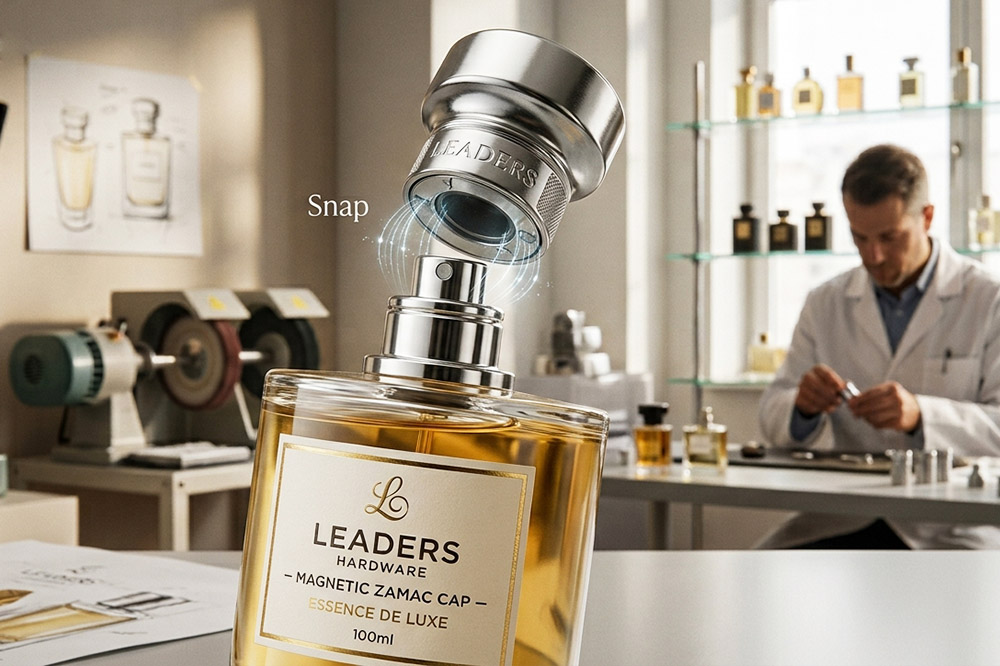
In de wereld van niche- en luxegeuren gebruiken parfumeurs geur om emoties en plaatsen op te roepen, terwijl het flesontwerp die abstracte kunst tastbaar maakt. Voor luxe parfummerken is de eerste fysieke interactie van een klant met een product niet de eerste spray, maar het precieze, tactiele moment waarop ze de dop van het parfumflesje vastpakken en optillen. Deze vluchtige interactie beïnvloedt hoe klanten de kwaliteit van een merk en het vakmanschap beoordelen. De grote luxe parfumhuizen laten tegenwoordig de klassieke sluitingen met wrijving achterwege en kiezen voor magnetische sluitingen van zamac (zinklegering). Als toegewijde fabrikant van designparfumdoppen van zamac levert Leaders Hardware de beste oplossingen op maat. Wij weten hoe deze nauwkeurig ontworpen sluiting een gewone, functionele dop kan transformeren tot een iconisch symbool van luxe. 1. Een ritueel met twee zintuigen: aanraking en geluid Traditionele parfumdoppen maken gebruik van eenvoudige plastic binneninzetstukken en mechanische spanning om op de flessenhals te vergrendelen. Na verloop van tijd kan slijtage aan het plastic ervoor zorgen dat de dop losraakt, terwijl een te strakke sluiting onhandig trekken vereist, wat het verstuivingspompje kan beschadigen. Een magnetische sluiting geeft deze interactie een geheel nieuwe betekenis: De bevredigende "klik": akoestische precisie Op het moment dat de magneten contact maken, hoor je een heldere, solide "klik". Deze feedback is een sterk psychologisch signaal in de akoestische techniek en duidt op nauwe productietoleranties, structurele integriteit en vakmanschap van hoge kwaliteit. Naadloze demping en automatische uitlijning Magnetische doppen vereisen geen geforceerde druk. Naarmate de dop de flessenhals nadert, glijdt deze door de magnetische aantrekkingskracht soepel op zijn plaats. De op maat gemaakte magnetische doppen van Leaders zijn voorzien van nauwkeurige interne geleiders en bieden 360-graden zelfuitlijning – ze draaien automatisch om merklogo's elke keer perfect uit te lijnen met de voorkant van de fles. 2. De techniek achter de foto: hoe leiders de kunst beheersen. Het leveren van een perfecte magnetische sluiting vereist een rigoureus industrieel ontwerp, geavanceerd matrijsontwerp en nauwe assemblagetoleranties. Bij Leaders doorloopt elke magnetische Zamac-dop een nauwgezet engineeringproces: Nauwkeurige kalibratie van de trekkracht Zwakke magneten zorgen ervoor dat de dop er gemakkelijk afvalt, waardoor de verstuiver onbeschermd achterblijft. Te sterke magneten creëren een te sterke aantrekkingskracht die de verstuiver kan losmaken. Leaders kalibreert de ideale trekkracht (doorgaans 600 tot 1200 gram) om moeiteloos met één hand te kunnen openen, terwijl de dop stevig vast blijft zitten als de fles per ongeluk aan de bovenkant wordt opgetild. Precisieassemblage van meerdere materialen Een hoogwaardige magnetische sluiting is meer dan alleen een magneet die in een behuizing is gelijmd. Te sterke magneten kunnen een te sterke aantrekkingskracht uitoefenen waardoor de verstuiver losraakt. Leaders stelt de ideale trekkracht in (meestal 600 tot 1200 gram) zodat de dop moeiteloos met één hand geopend kan worden, maar toch stevig vast blijft zitten als de fles per ongeluk aan de dop wordt opgetild. Corrosiebestendigheid en kwaliteitscontrole Sterke magneten zijn gevoelig voor de effecten van ruwe geuroliën en vocht in de lucht. Alle interne magneten die door Leaders worden gebruikt, worden behandeld met een gespecialiseerd anticorrosieproces, bestaande uit een drielaagse nikkel-koper-nikkelcoating of een beschermende harslaag, en worden onderworpen aan strenge tests op roestvorming en demagnetisatie, waaronder alcohol- en zoutneveltests. 3. Waarde ontsluiten voor luxe parfummerken Voor eigenaren van parfummerken, creatief directeuren en inkoopteams voor verpakkingen is overstappen op op maat gemaakte magnetische Zamac-doppen bij een gespecialiseerde productiepartner zoals Leaders meer dan een technische upgrade: het verhoogt direct de merkwaarde en de winstmarges. Wat betekent "zwaargewicht" in de luxebranche? De combinatie van de koele, dichte textuur van zinklegering met een soepele magnetische sluiting straalt direct compromisloze kwaliteit uit naar de consument. Verlenging van de levensduur van het product In tegenstelling tot plastic druksluitingen die na herhaald gebruik slijten, vertonen magnetische sluitingen vrijwel geen mechanische slijtage, waardoor de fles gedurende zijn hele levensduur probleemloos geopend kan worden. Het creëren van virale momenten op sociale media Op visueel georiënteerde kanalen zoals Instagram en TikTok fungeren close-upvideo's die de voelbare "klik" en de automatische uitlijnfunctie benadrukken als aantrekkelijke marketingmiddelen die de kwaliteit van uw verpakking laten zien. Werk samen met marktleiders voor uw op maat gemaakte zamac-verpakkingen. Echte luxe zit hem in de details. Een speciaal ontworpen magnetische dop van Zamac voor parfumflesjes overstijgt de functionaliteit van een eenvoudige verpakking en wordt een stille ambassadeur voor uw merk. Leaders Hardware, een professionele fabrikant en leverancier van op maat gemaakte Zamac parfumdoppen en flesversieringen, en verpakkingen op maat, biedt complete OEM/ODM-services: van 3D-ontwerp en matrijsfabricage tot galvaniseren, magnetische assemblage en strenge kwaliteitscontrole. Wilt u uw parfumverpakking een stijlvolle upgrade geven met een opvallende magnetische sluiting? Neem vandaag nog contact op met Leaders om uw ontwerpideeën te bespreken en samples op maat aan te vragen. Veelgestelde vragen: Vraag 1: Wat is de gebruikelijke minimale bestelhoeveelheid (MOQ) en levertijd van uw producten?Uw gepersonaliseerde magnetische Zamac parfumdopjes en hoeveel bedragen de verzendkosten? A: De minimale bestelhoeveelheid (MOQ) voor de op maat gemaakte zamac-doppen is 3.000 tot 10.000 stuks. De ontwikkeling van de mal duurt ongeveer 25-30 dagen, de massaproductie 30-35 dagen nadat de monsters zijn goedgekeurd. Vraag 2: Parfumdampen lossen de roest op van interne magneten! Hoe voorkom je dat interne magneten gaan roesten of demagnetiseren door parfumdampen? A: Alle interne magneten zijn voorzien van een drievoudige corrosiewerende galvanische coating (Ni-Cu-Ni) of ingekapseld in een beschermende hars. Na een combinatie van alcoholonderdompelings- en zoutneveltesten voldoen ze aan de eisen voor langdurige duurzaamheid en esterbestendigheid. Vraag 3: Kunnen magnetische buitendoppen worden gemaakt die passen op bestaande standaard parfumfleshalzen? A: Ja. Wij ontwerpen op maat gemaakte kunststof binneninzetstukken (PP/POM) die passen op standaard flessenhalsmaten (bijv. FEA 15 mm) of aangepaste halsprofielen. Dit zorgt voor een soepele klik, een constante trekkracht en een luchtdichte afsluiting, zonder dat u uw bestaande flessenmal hoeft aan te passen.
Thuis
WhatsApp
E-mail
Contacten