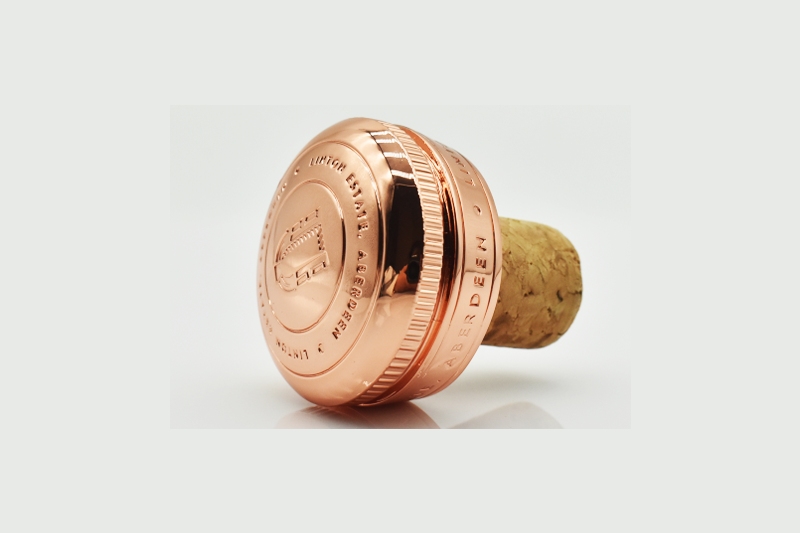
Magnetic Perfume Caps: How to Balance Luxury Feel, Fit, and Refillable Packaging
Magnetic perfume caps can add a touch of luxury to perfume packaging. They make the bottle easier to use every day. When the magnetic closure is built into the design of the bottle not just added on as a decoration it feels more thoughtful and special. People remember that kind of detail. The best magnetic perfume caps have an inner fit. They’re balanced in weight so they don’t feel heavy or light. The pull is smooth and controlled.. The finish matches the scent’s personality. Whether it’s bold soft, modern or classic. That’s what makes the whole experience feel more complete.
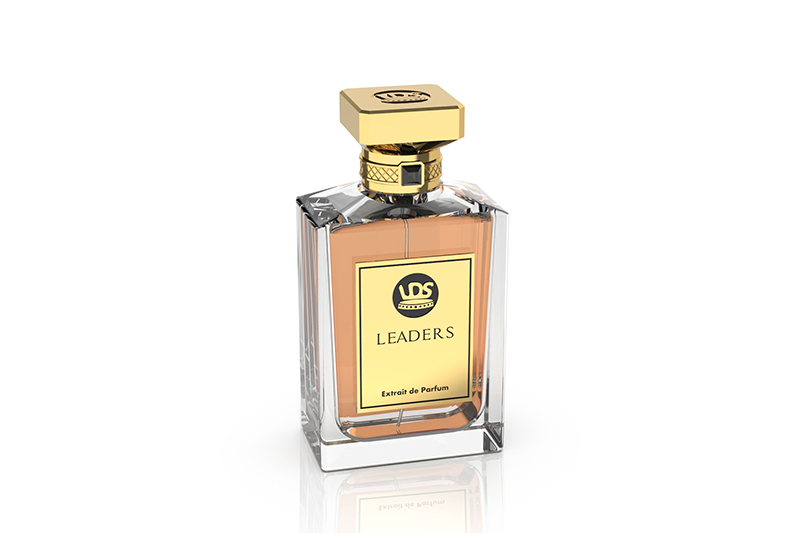
For fragrance brands, the cap is a fusion of material, mechanics, and visual identification. LEADERS creates custom perfume caps as well as Zamac packaging parts and travel sizes as a coherent packaging system.
Why Magnetic Perfume Caps Matter in Modern Fragrance Packaging
Luxury Is Now a Tactile Experience
Perfume caps are often the first part of a fragrance that customers notice before they read the packaging. The sound, resistance, weight, and alignment of the closure all influence the first impression of a product, and a magnetic cap closure creates a clean close and reopens cleanly. The magnet, inner structure, bottle neck, and outer shell of the cap all need to work together to create this experience.
Magnetic perfume caps are more than a high-end finishing device. They can also support a repeated user experience, protect the sprayer between applications of perfume, and create a clear closure for a fragrance line. However, the design has to be developed with due consideration of several practical aspects, e.g., opening force, cap stability, surface wear, transport protection.
Engineer the Cap Around Bottle Fit
Match the Inner Structure to the Bottle Neck
First, develop the bottle drawing including the neck dimensions, collar relationship to the bottle body, sprayer position, and overall dimensions to accommodate the inner insert. The inner insert could be of PP or plastic to provide alignment and grip, and be covered by an outer Zamac shell to form the visible outer component that provides the user with a good handfeel.
This same principle applies to bottles that are fitted with a crimped pump or an FEA-style neck. The cap must clear the actuator, sit adequately on the bottle’s collar, and remain steady when opening and closing the bottle again and again. A prototype will reveal minor problems with the dimensions, wobble, edge contact, and opening resistance prior to tooling and finishing the molds.
Balance Weight, Pull, and Daily Handling
Although weight is often a reason for choosing Zamac for luxury packaging, more weight is not necessarily better. While a heavy cap on a display bottle can underpin the message of substance, a lighter design will be more suitable for travel sizes or products that will be constantly carried by customers. The choice will depend on bottle size, customer use, package protection during transport, and the price position of the product.
In addition to measuring the magnetic force in numbers, the use of the cap also needs to be tested. The cap must be attracted strongly enough in order to close properly, but not so strongly that it is difficult to remove from the bottle. The opening and closing, the correct alignment, the use again and again, the safety of the print, and the feel of the cap when put back on the bottle are all factors to be tested.
Choose the Right Material Direction
When Zamac Creates a Premium Hand Feel
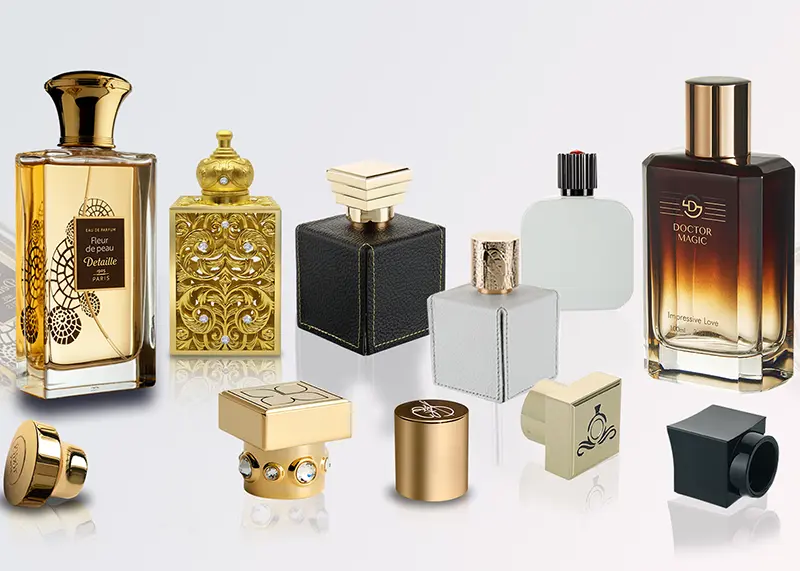
The Zamac perfume cap is suitable for creating sculptural shapes with clear-cut lines and recesses. It can be lacquered in colors such as gold, silver, black, chrome, gunmetal, bronze, or any other required color and finished with a polished, rough, brushed, or vintage surface. This way, the perfume cap becomes the representative for a niche or luxury fragrance.
When Aluminum, Plastic, or Wood Fits Better
Instead of Zamac, Aluminum could be lighter, Plastic could be simpler in shape and color, and wooden caps could be warmer/natural in character to the fragrance. Resin/Plastic Caps would also be suitable for round and very colorful designs where metal would make the product look too formal.
Choose the material that supports your brand story and the way your product will be used. Examine the complete cap, including the inner component, decorative features, surface finish, and packaging requirements. In evaluating different materials, compare them in their fully assembled form, as opposed to selecting a material based on the attractive raw appearance of a single sample.
Extend the Design to Refillable Travel Formats
Use Magnetic Travel Spray Cases for Daily Carry
A full-size bottle has display value, but a refillable perfume atomizer is something you can carry with you every day to work, in the evening, in your handbag, etc. So the portable format becomes part of the brand experience and not just a small promotional item. A magnetic travel spray case can recreate the main package’s closure, color, metallic finish, and/or logo in a small travel case.
The travel spray formats of LEADERS fragrances are available in 8 ml and 10 ml versions. The travel spray case consists of various parts like a Zamac tube, PU leather, a glass bottle, and a screw pump sprayer. Information about these details is useful when the travel item is meant to be durable, to be refilled, and to be connected to the main fragrance in a nice way.
Keep Full-Size and Portable Packaging Visually Connected
As the travel-size format does not have to be a mini version of the full-size bottle, a relationship between both formats is sufficient. A shared cap color, identical logo, same leather structure, same metallic color, or even a magnetic closure is enough to clearly recognize both items as part of the same fragrance family.
The use of a Zamac rich hero bottle and a more compact travel spray formulation is highly effective for discovery sets and gift packaging. By using visual cues within the set, the set as a whole can look highly considered, and the customer can clearly see the function of each product within the set.
Coordinate Finishes and Brand Details
Use Surface Treatment as Part of the Structure
Finishes such as electroplating, painting, brushing, polishing, and vintage effects not only change color but also affect how the edges, recesses, logos, and other decorative elements are perceived under different lighting conditions. A finish board or physical reference should establish the boundaries for acceptable gloss, color, and texture, as well as the contrast of logos and visible surface areas before production approval.
Logo placement also should follow the cap geometry. Whether you’re using embossing, debossing, laser marking, color filling, or decorative crystals, each of these techniques requires a certain surface area and a fixed position. Your branding should be readable and not look like some printed label that was stuck to some random object.
Review Samples Before Finalizing the Production Standard
Check a development sample on the real bottle. Check fit, opening and closing, cap alignment, finish, logo and print position and security, and any marks to the surface. For magnetic closures, check whether the cap goes to the correct position easily or if it needs to be forced.
The LEADERS custom perfume cap range is a tool to explore different materials, surface finishes, inner structures, decoration techniques, and fragrance components. A useful review of a complete product.
Conclusion
A magnetic perfume cap is at its best when design and daily use are optimally aligned. Therefore, the closure must match the bottle neck, the inner insert, the weight target, the design, the surface finish, and the portable fragrance concept. If all these requirements are optimally coordinated, the magnetic cap becomes a bigger part of the overall concept of a fragrance and even reinforces the link between the full-size version and the refillable version.
For brands developing a distinctive fragrance line, explore LEADERS solutions for custom perfume caps, Zamac packaging, and refillable travel spray formats.
FAQ
Q: What makes magnetic perfume caps suitable for luxury fragrance packaging?
Magnetic perfume caps can be opened and closed in a controlled way. They can add a premium feel to the packaging and create a special user experience. The performance of magnetic perfume caps is determined by several factors, including the bottle neck, inner structure of the bottle, the magnetic force, the weight of the cap, and the surface finish.
Q: How should a magnetic Zamac perfume cap fit a perfume bottle?
A: Start with a bottle neck drawing including the collar and sprayer with the required clearance between the components. The inner component should be designed so that the cap fits without any wobble. The outer Zamac shell gives the necessary weight and looks. Check the cap on the real bottle for correct alignment, opening force, closing action, and long-term stability.
Q: Can magnetic caps be used with refillable travel perfume sprays?
A: Yes, a magnetic cap can be used for portable fragrances if the case, vial, pump, and closure are assembled as one single unit. LEADERS Travel Spray is available in 8ml and 10ml sizes. It must also be possible to refill the portable packaging; it must offer protection, be suitable for handling, and have the same appearance as the larger bottle.